A guide to the factors that determine the cost of materials, logistics, and installation.
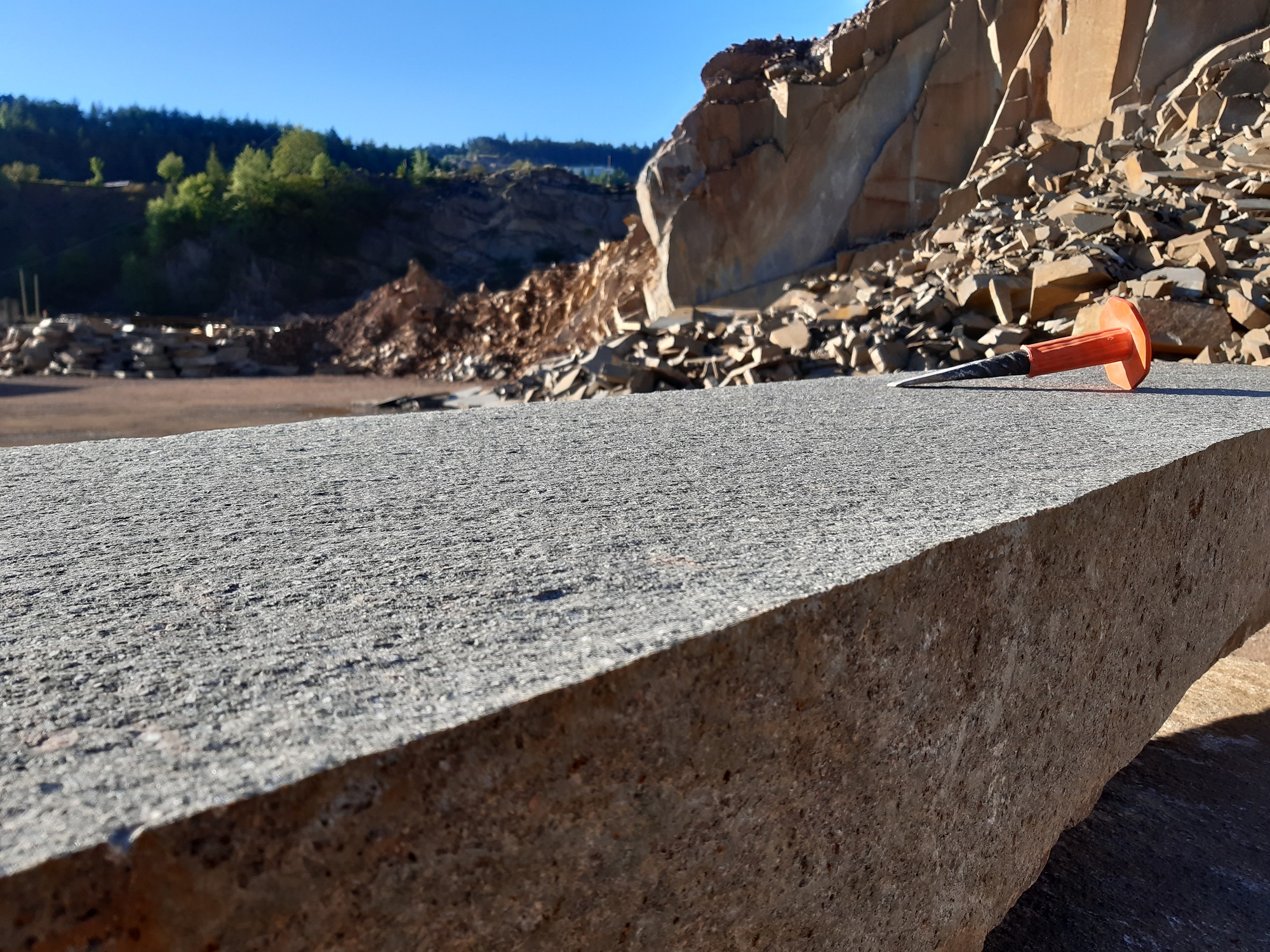
The price of porphyry cannot be expressed as a single value applicable to every project. In fact, the cost varies depending on the product chosen, the size, the thickness, the quantity, the required finishing, the intended use, and the installation conditions. Pedestrian walkways, private driveways, public squares, and vehicular surfaces each require different performance characteristics and solutions. To accurately assess the cost of porphyry, it is therefore not enough to simply compare prices per square meter: the entire system must be considered, from the material to the installation.
In this guide, we examine the main variables that affect the price of the most common types of Trentino porphyry.
For a summary of cost factors and to request an estimate, visit the page dedicated to porphyry prices.
The main factors to consider are:
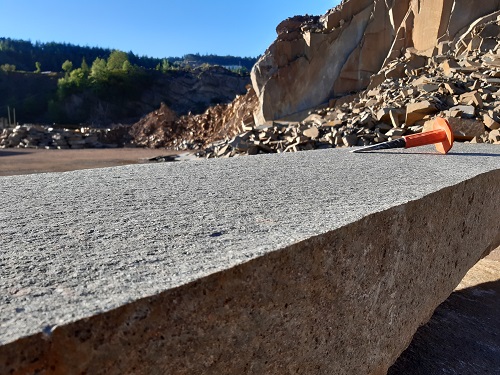
A key distinction concerns how the material is obtained. Much of the porphyry produced features a natural quarry surface that is flat and slip-resistant, allowing it to be used without any additional surface treatment.
This category includes, among others, irregular slabs, cubes, “ setts ” (slabs with a natural edge), and numerous types of tiles.
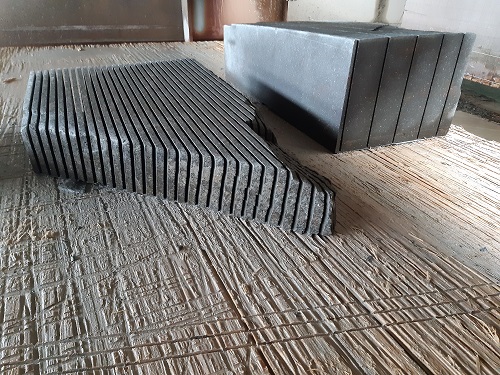
Other products, on the other hand, are cut from blocks and undergo further processing. This is the case, for example, with flamed or brushed tiles, steps, and solid elements for staircases. The greater number of processing steps required affects the final price.
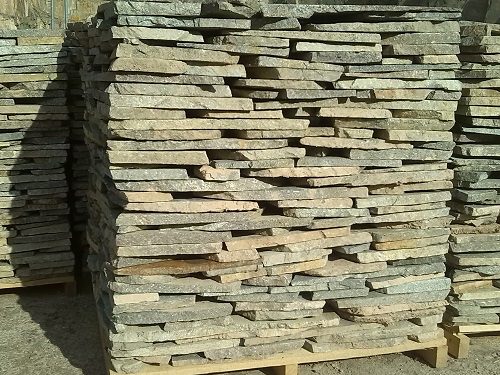
Among products with a natural quarry finish, irregular porphyry slabs—often referred to as “lastrame”—generally represent the most cost-effective option in terms of material cost.
The most common types are:
Standard slabs can be used—depending on the project and the subgrade—for driveways, sidewalks, and residential areas subject to occasional vehicular traffic.
The thin types, on the other hand, are primarily recommended for pedestrian areas.
The difference in thickness also affects the amount of material required.
As a general guideline, standard slabs can cover approximately 85 kg per square meter, while for thin slabs, approximately 60–65 kg per square meter may be sufficient.
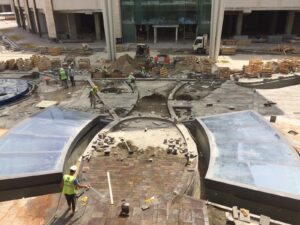
Installation plays a particularly important role in the overall calculation. The irregular shape of the elements requires experience in laying the paving and creating harmonious, even joints. In addition to the cost of materials and installation, you must also factor in transportation, the distance to the delivery site, and any unloading operations using a mobile crane.
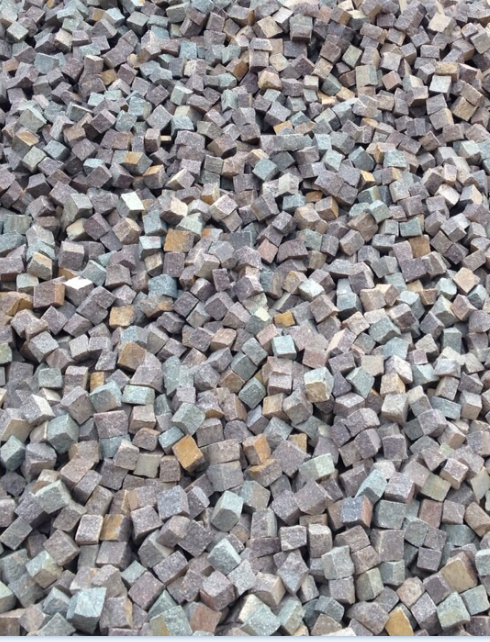
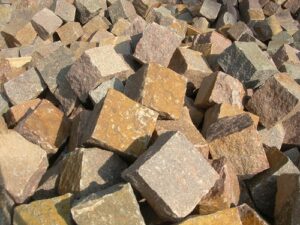
Porphyry cubes, characterized by their natural surface and cut edges, are available in various sizes, selected based on the intended use of the paving.
In residential settings, for example, 4/6 and 6/8 cm sizes are common; in urban and road applications, larger sizes, such as 8/10 cm, are often used. As the size increases, so does the weight required to lay one square meter of paving.
For your information:
These differences affect the cost of materials, transportation, and handling.
When the construction site and unloading procedures allow it, the material can be supplied in bulk. Alternatively, big bags or wooden crates are used; in this case, both the cost of the packaging and the cost of the equipment needed for unloading must be taken into account.
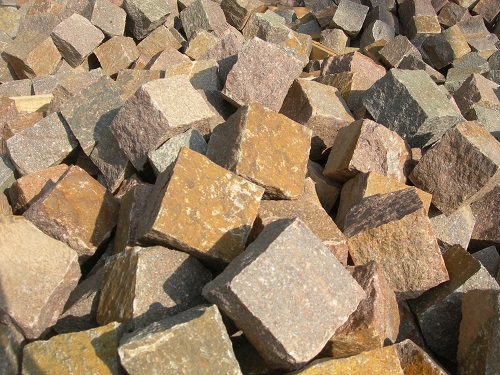
The layout chosen for the installation also affects the final cost. A traditional“contrasting arches” pattern typically requires a different level of effort than more elaborate designs, such as concentric circles or a peacock’s tail. For a parallel-row pattern, on the other hand, square-edged pavers are used; these are manufactured with a more regular shape and are more expensive than standard pavers.
Finally, edging elements must be added to the cost of the paving. setts and kerbs, which are generally priced per linear meter, define the perimeter and can also serve to contain the surrounding soil.
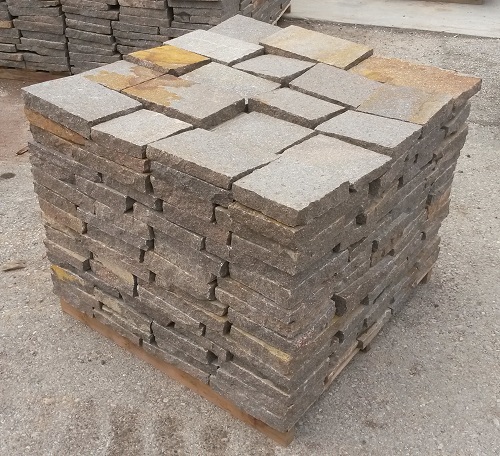
Natural-faced porphyry tiles with cut edges are produced in fixed widths—generally in multiples of 5 cm—and in continuous lengths.
Requests for fixed lengths or non-standard sizes require additional processing and sorting and may therefore significantly increase the price.
Another key factor is thickness.
The choice must be based on the intended use: the requirements for a private pedestrian area differ from those of a public space subject to vehicular traffic.
Generally speaking, all other factors being equal:
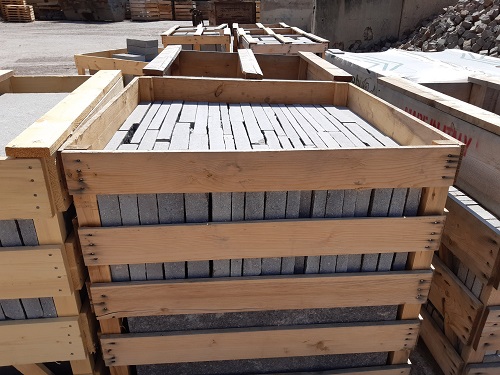
Tiles can also be produced with saw-cut edges. Compared to cut-to-size edges, this process results in more uniform and narrower grout lines, but it requires the use of machinery and diamond blades and is therefore more expensive.
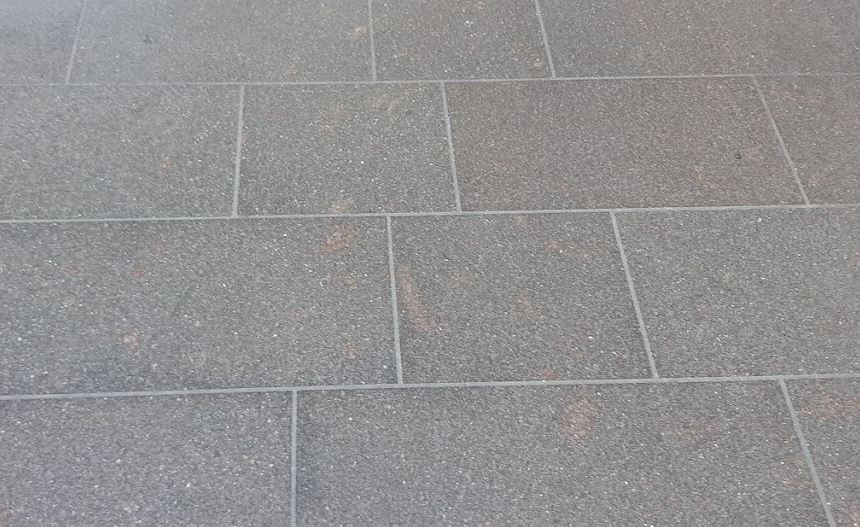
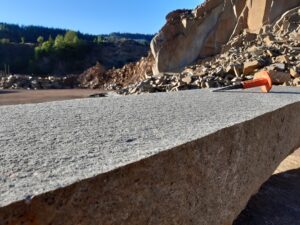
Flamed-finish tiles are produced by sawing compact blocks and subjecting them to a surface treatment. They are typically manufactured in fixed, relatively thin thicknesses—often 2 or 3 cm—and are primarily used in pedestrian areas, covered outdoor spaces, and, with the appropriate finishing, even in some indoor spaces.
The sawing, flamed finish, and any subsequent processing make the cost of this material higher than that of tiles with a natural quarry surface.
As a rough guide, the weight can be approximately 50 kg/m² for a 2-cm thickness and approximately 75 kg/m² for a 3-cm thickness. However, the lower weight compared to other types can offer advantages during transport and handling.
Steps, solid blocks, thresholds, and window sills are also produced from these blocks. These are generally custom-made products, and their price depends on the dimensions, thickness, finish, and processing required by the project.
The total cost of flooring is not limited to the price of the material alone. Logistics and installation can have a significant impact and must be taken into account from the very beginning.
When it comes to transportation, the following factors must be considered:
The cost of installation, on the other hand, depends on the preparation of the subfloor, the type of product, the chosen layout, the laying and sealing system, the presence of cuts and joints, and the overall complexity of the project.
This is why two flooring projects made with the same material can have different final costs.
Without information about a project, it is not possible to provide an exact price. However, it is possible to give a general overview of how the various solutions compare.
| Type | Estimated cost range for the material |
|---|---|
| Irregular slabs | More content |
| Standard cubes | Intermediate |
| Square top cubes | Upper-intermediate |
| Natural-finish tiles with cut edges | Upper-intermediate |
| Natural-finish tiles with sawn edges | High |
| Flamed tiles and elements cut from a block | Higher |
This comparison is for informational purposes only and does not constitute a price list. The final cost may vary significantly depending on the size, thickness, quantity, selection, fabrication, transportation, installation, and project specifications.
To receive a recommendation that is consistent with the characteristics of the project, it is helpful to provide the following information:
Therefore, there is no single price for porphyry that applies to every situation.
The most cost-effective solution must be identified by evaluating the relationship between cost, performance, durability, aesthetic appeal, and installation conditions.
Italporphyry can provide technical information on products and assist designers, contractors, and clients in selecting the most suitable solution. Documentation related to the CAM Edilizia and CAM Strade standards, the Environmental Product Declaration (EPD), CE marking, and the technical tests required for stone materials is also available.
Visit the page dedicated to porphyry pricing, or describe the project, the square footage, and the delivery location to request information and a custom quote.
Via Kufstein, 1 - Staircase A, 2nd floor
38121 TRENTO (TN)
Tel. +39 0461 829835
Fax. +39 0461 829838
Email: info@italporphyry.eu
Web: www.italporphyry.eu