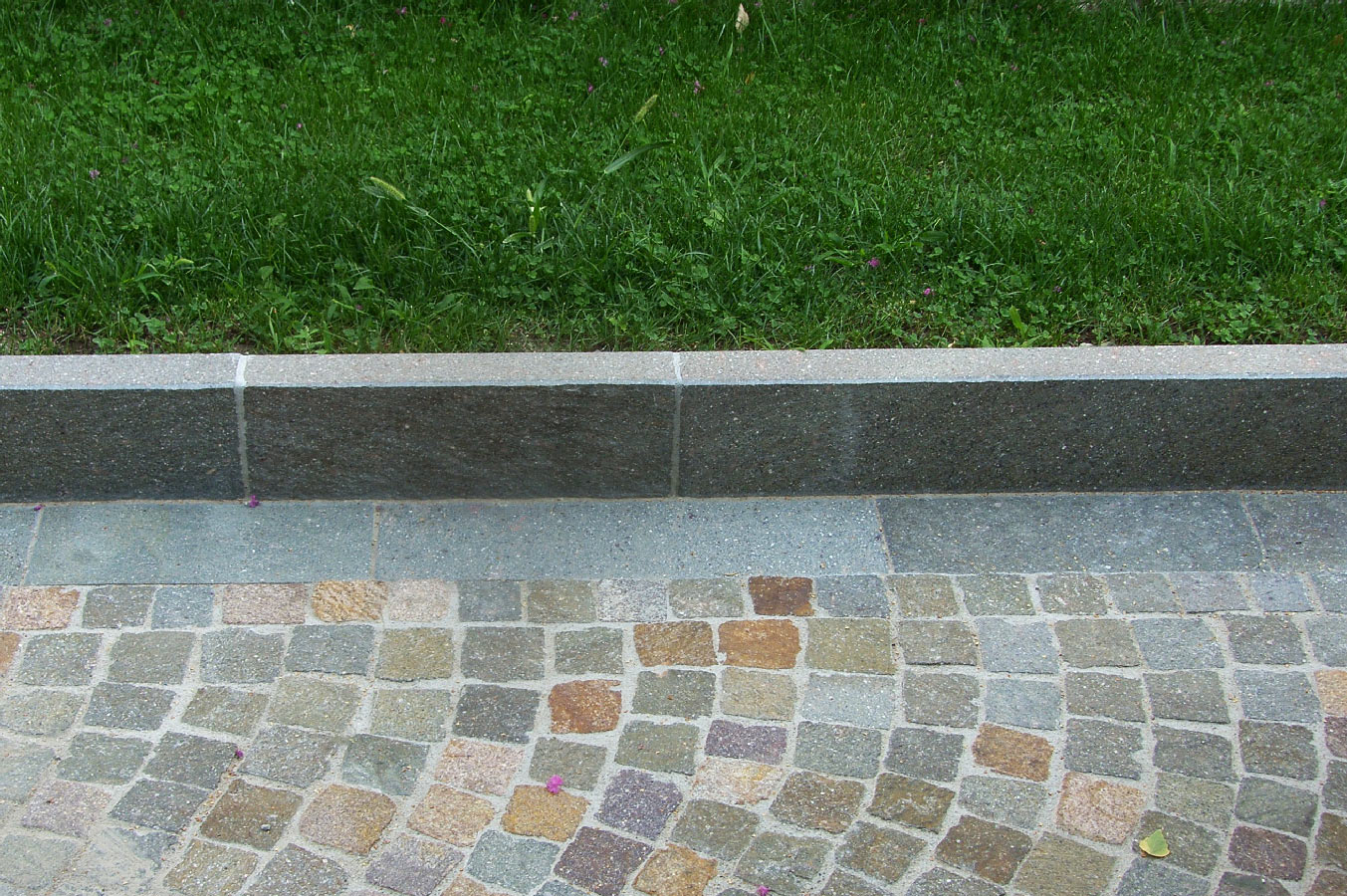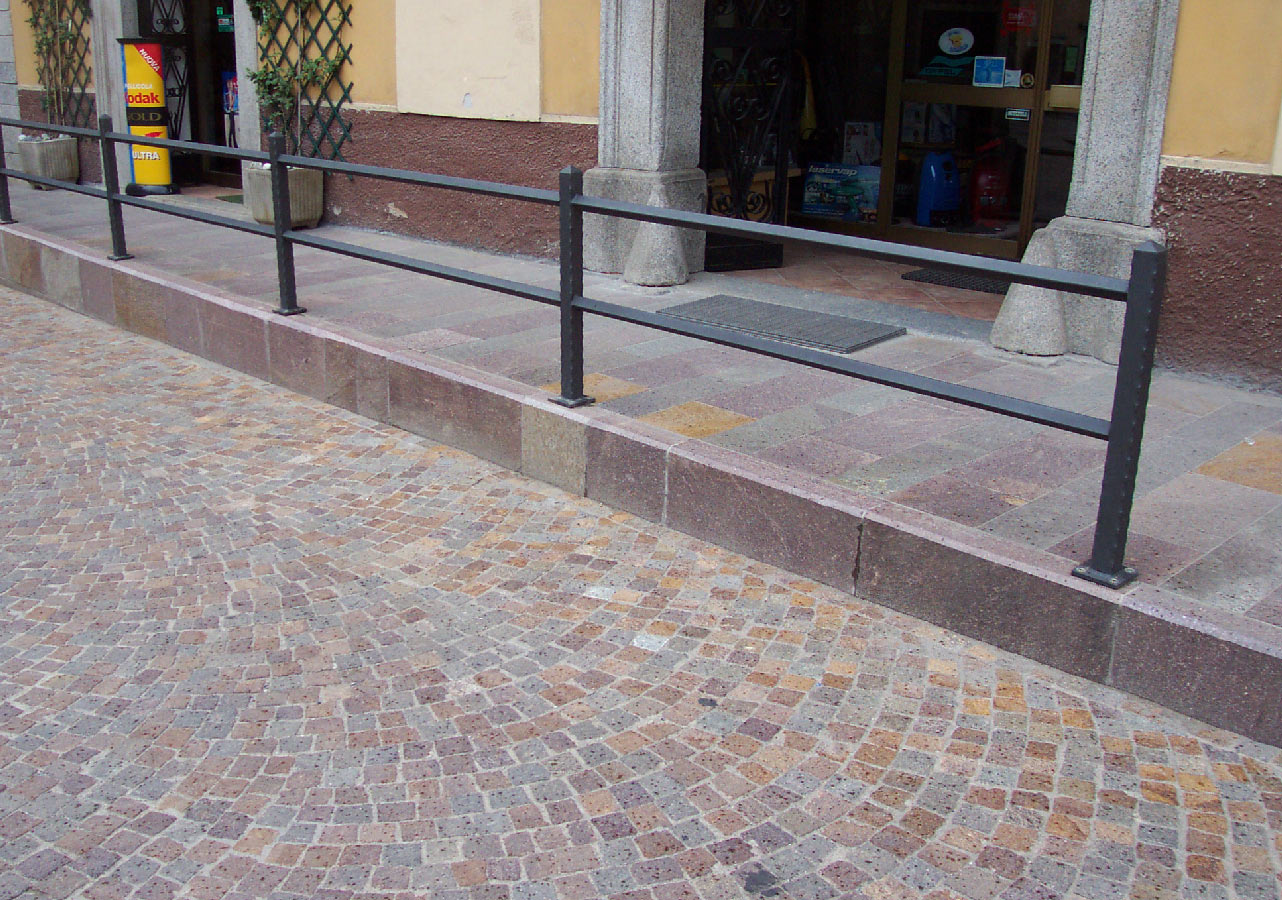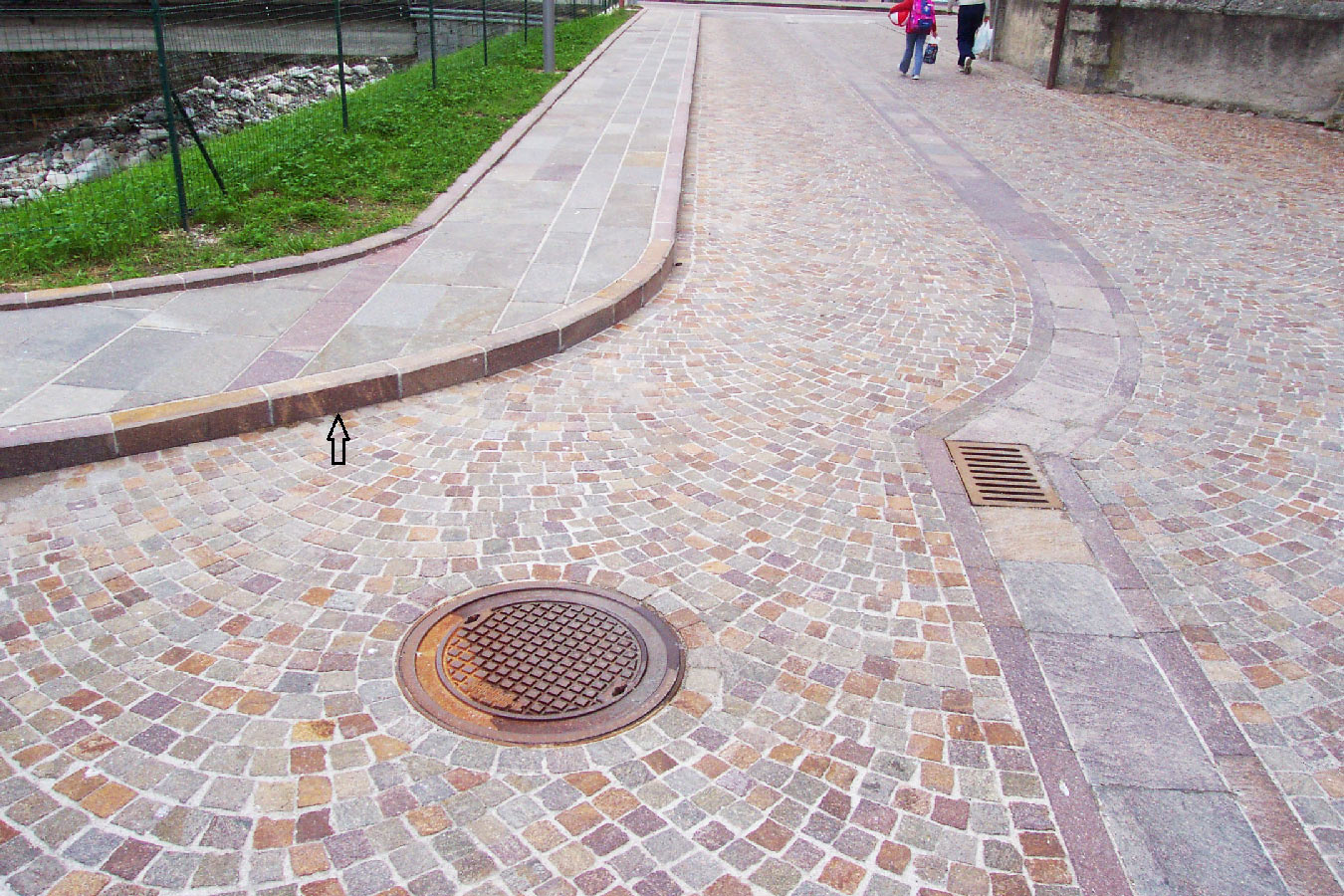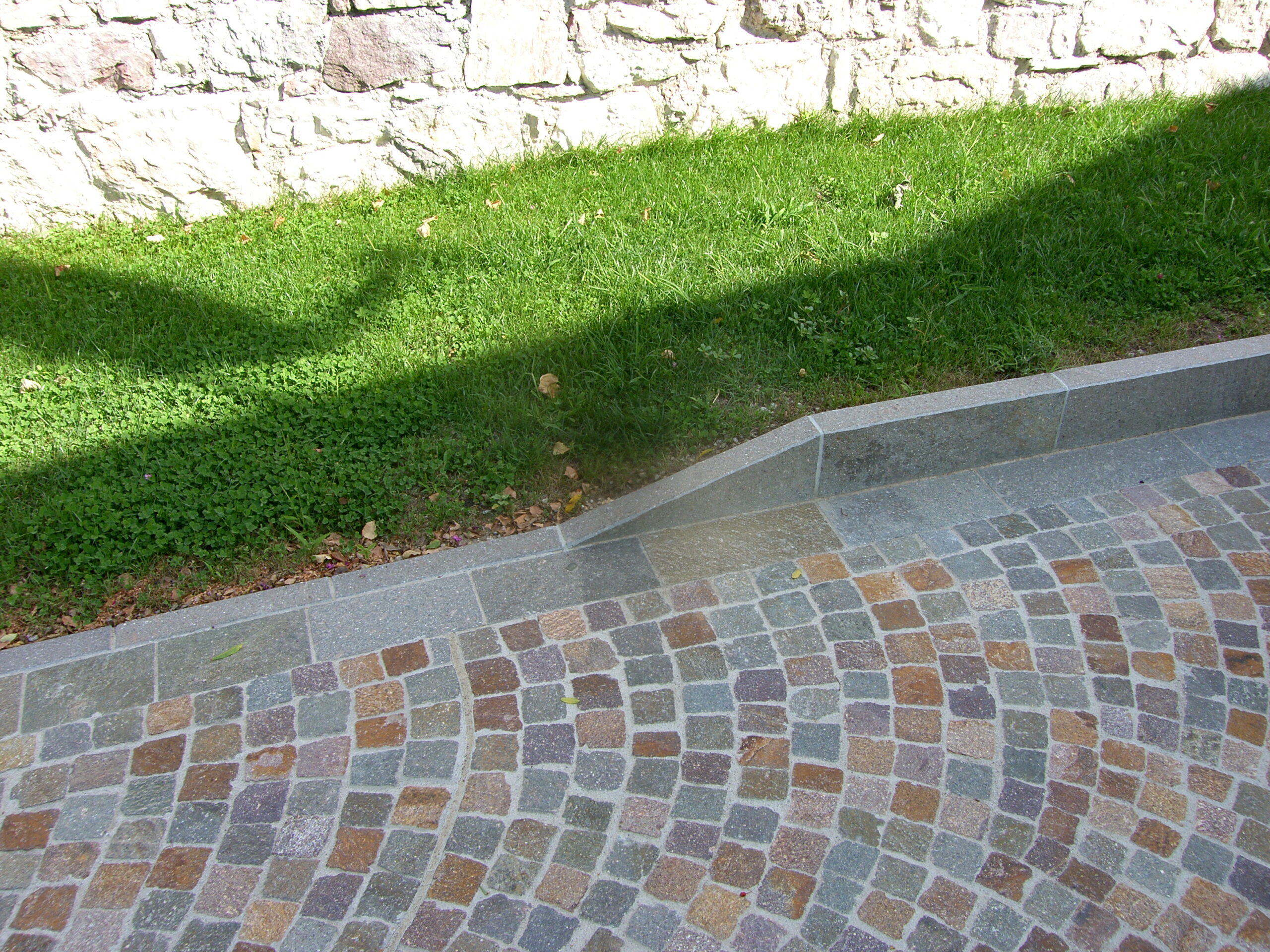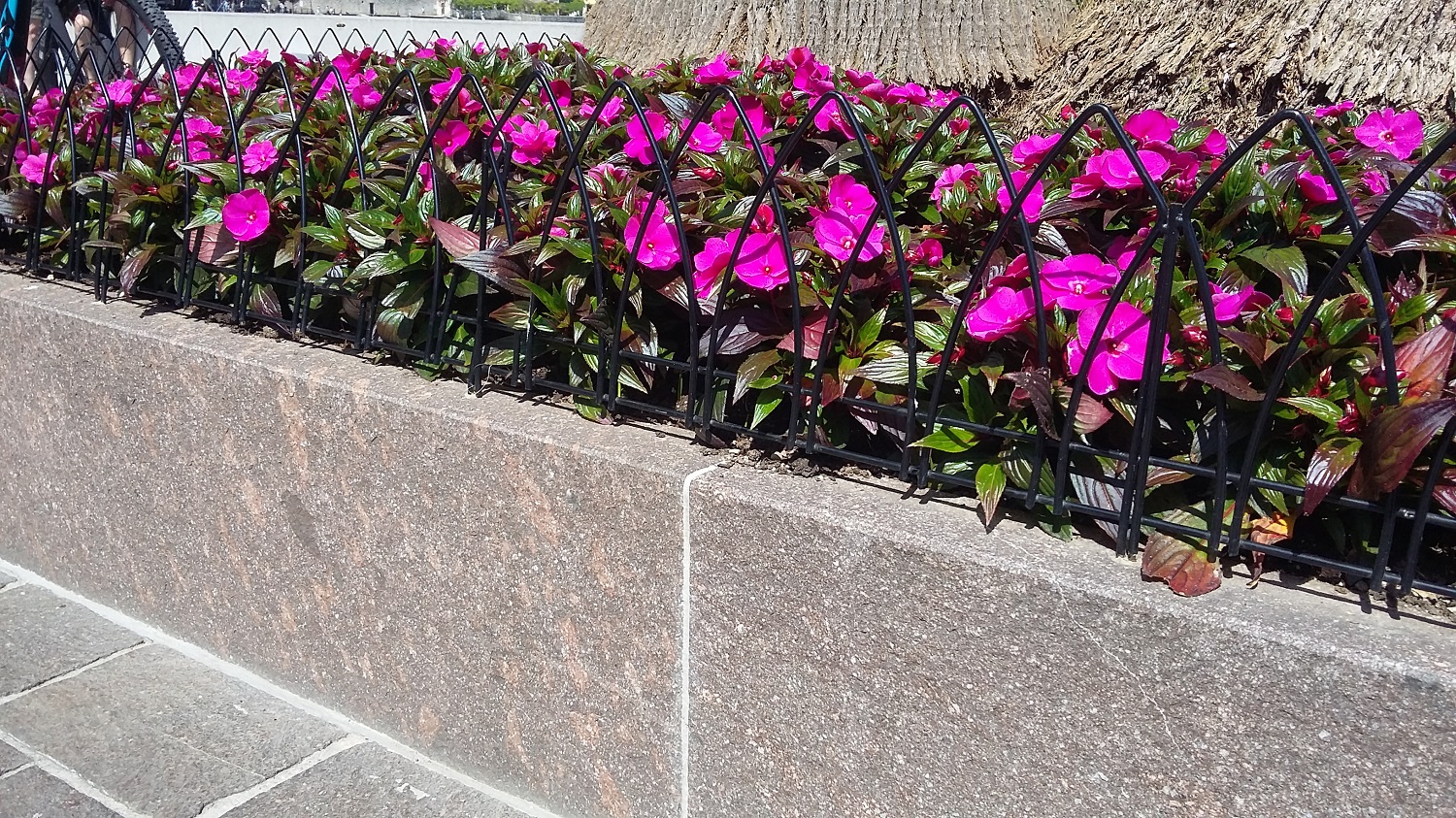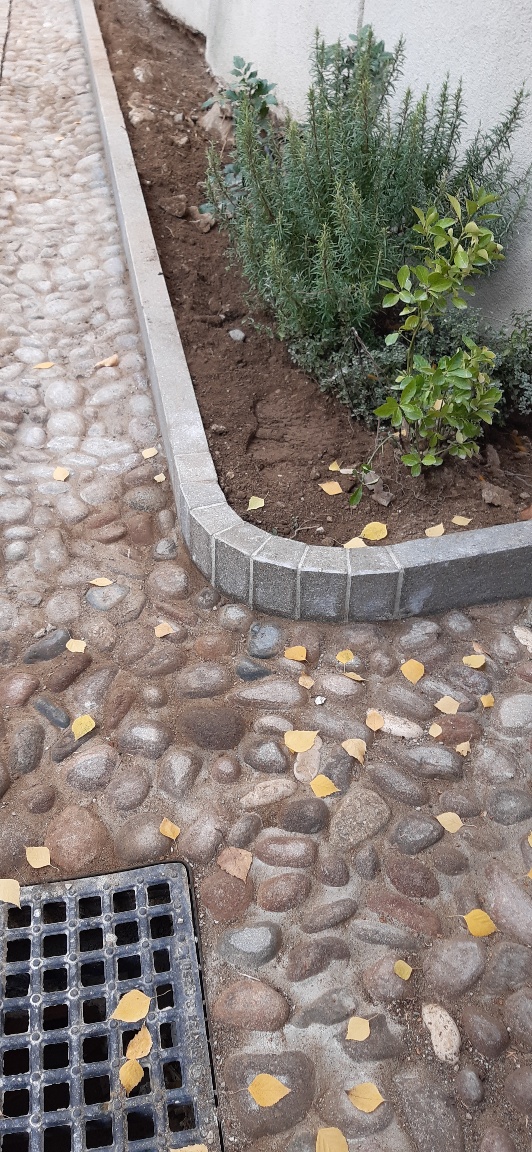
Porphyry kerbs are used for the construction of sidewalks, flowerbeds, steps, covers, and for delineating surfaces and pavements. According to the processing they are divided into: split top porphyry kerbs, natural top plane, sawn top plane, shotblasted top plane, flamed top plane and Bolzano type with sloping face. Porphyry kerbs have two side faces also called sides; one of which is seen and can be with natural quarry plane or sawn. The seen edge is always worked with a bevel of a few millimeters to tick off the sharp corner or, on request, with 45-degree or rounded bevels. Lengths are almost always running lengths. Kerbs can also be supplied with curved pieces for special finishes.
| Trade name | Trentino porphyry |
| Color | Red, gray, red violet and rust or mixtures |
| Processing | Obtained either from stratified material with natural plane, variable thicknesses, or by sawing from block with subsequent surface treatment |
| TYPOLOGY | HEAD THICKNESS (mm) | HEIGHT (mm) | WEIGHT (Kg/m) | JOINTS | RECOMMENDED TYPE OF USE |
|---|---|---|---|---|---|
| Split | 50, 60, 70, 80, 90, 100, 120 | 200 to 250 | 25 to 85 | Sliced - splitted | Delineation of flower beds |
| Natural quarry plane top and sawn sides | 80, 100, 120, 150 | 200 to 250 | 45 to 120 | Split, sawn | Delineation of sidewalks level changes wide steps traffic circle delineations |
| Sawn top and natural sides | 50, 60, 70, 80, 90, 100, 120, 150 | 200 to 250 | 25 to 120 | Split, sawn | Delineation of sidewalks level changes wide steps |
| Blasted or flamed or sandblasted top | 50, 60, 70, 80, 90, 100, 120, 150 | 200 to 250 | 25 to 120 | Split, sawn | Delineation of sidewalks level changes wide steps |
| All sides sawn and/or machined | 50, 60, 70, 80, 90, 100, 120, 150 | 200 to 250 | 25 to 120 | Sawn | Delineation of sidewalks flower beds with double-side visible lining steps use riser |
Via Kufstein, 1 - Staircase A, 2nd floor
38121 TRENTO (TN)
Tel. +39 0461 829835
Fax. +39 0461 829838
Email: info@italporphyry.eu
Web: www.italporphyry.eu