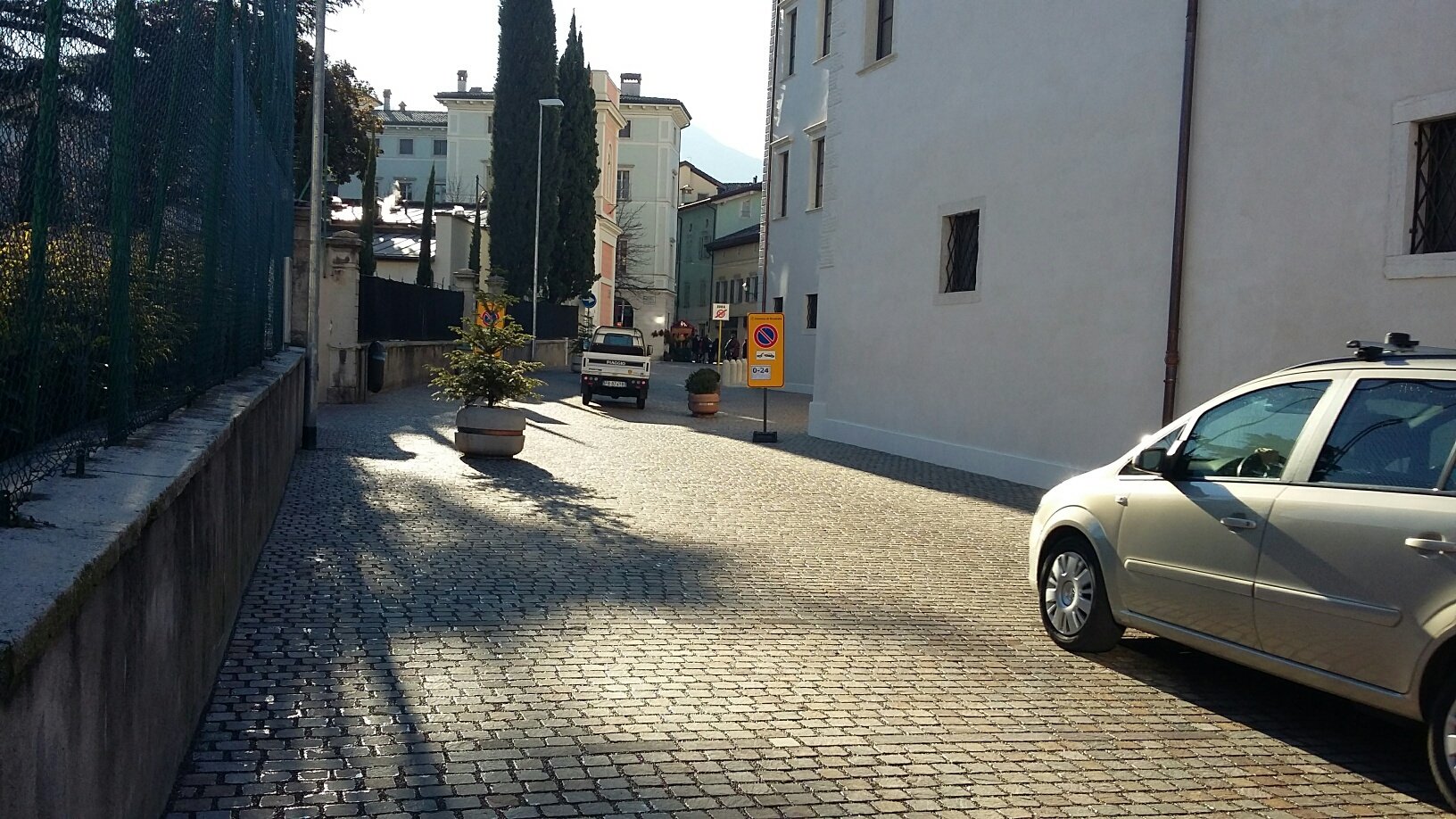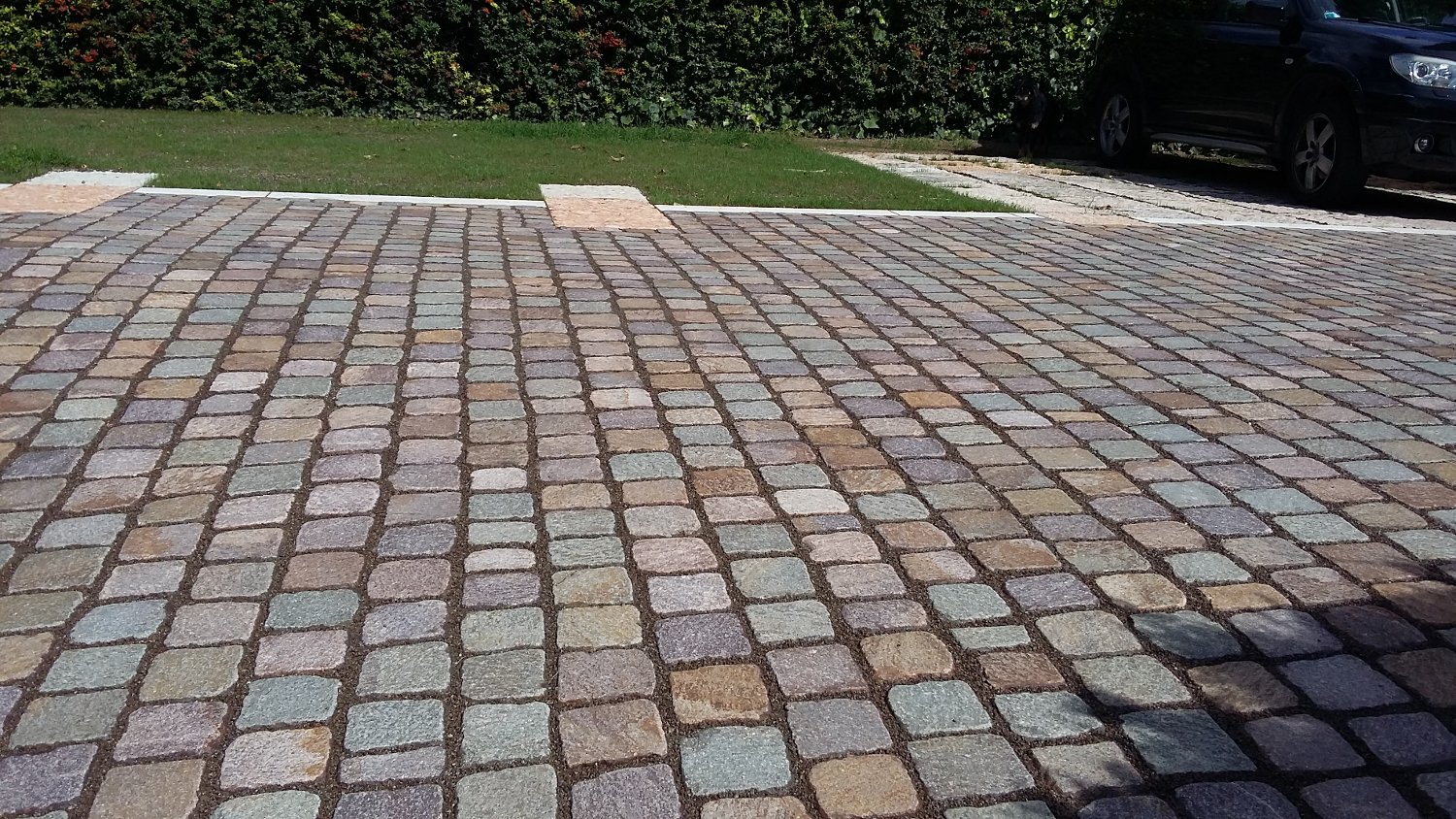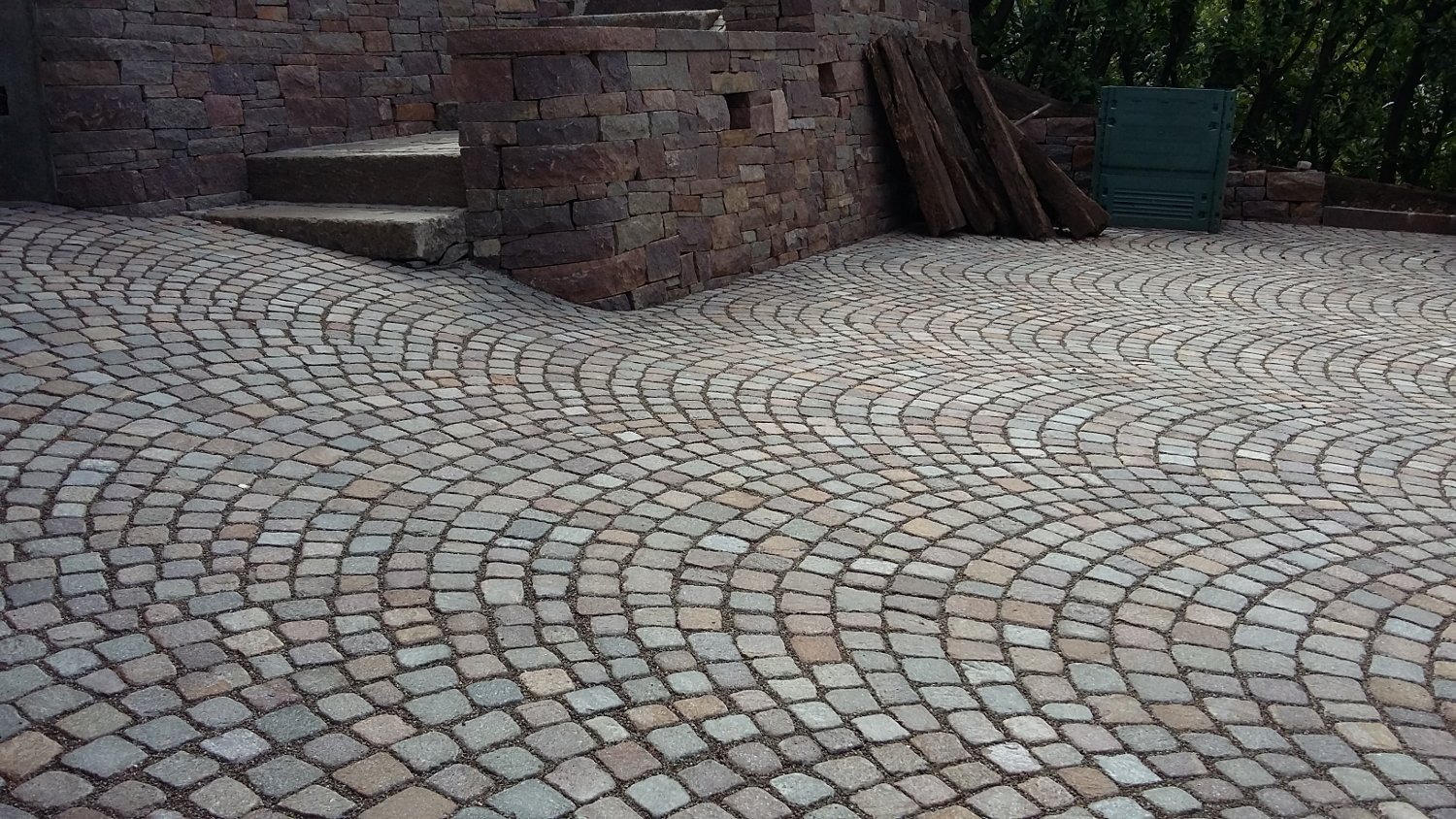
This was first realized by the UNI working table in charge of revising the UNI 11322-2009 standard. Up to that time, the technical standard, as far as polyurethane resin sealing is concerned, was limited to reporting few indications: "...it is carried out in the laid and vibrated pavement in the sole case of bedding in rock crushed stone; the resin is poured manually in each joint with special equipment. In the case of Heavy Vehicular traffic, it is preferable to adopt elastic sealants (e.g. polyurethane resin)." In July 2018, the new normative technical document UNI 11714-1 provided and codified the materials and procedures required for stone floors sealed with polyurethane resin. Thus filling what could be called a partial and dangerous regulatory gap on the subject.
UNI 11714-1:2018 Stone coatings of horizontal, vertical surfaces and ceilings-Part 1, Instructions for design, installation and maintenance," covers polyurethane resin in what is identified as a loose bed system. Polyurethane resin is recommended for the stress classes P4; P5; P6; P7; P8. For class P9, i.e., for urban roads, roads with public transportation lanes or obligatory routes, high-traffic roads, traffic circles, speed humps and bollards, polyurethane resin is even prescribed . In essence, the standard states that in addition to cementitious premixes, polyurethane resin is the best material to support vehicular traffic. Obviously, the "loose bed system with resin" must also meet all the requirements of the standard among which those of safety, sustainability and durability are of particular importance.
It is within this framework and with these goals that in 2017 the partnership of Italporphyry with Mapei spa. A collaboration in the laboratory and in the field, which led to the development of the resin Mapestone Joint. That is, a product created by Mapei's Research and Development section, which moves more than 200 specialists every day, and which has found in Italporphyry the ideal partner in offering the expertise and experience to Mapei researchers for the final refinement of Mapestone Joint, both in terms of performance and all-round safety. In this regard, it is important to point out that the product is characterized first of all by the absence of solvents and therefore the absence of flammable components. Then there is no danger either in storage, transport, or finally in site handling. It is also and not only for these reasons that Mapestone Joint has found immediate appreciation from those in the industry. As an example in 2018 alone, between public and private construction sites Italporphyry supplied Mapestone Joint to seal more than 40,000 square meters of surface area.
The approach and working methodology that ensured the birth of Mapestone Joint are then the basis of the operational criteria that towards the end of 2018 also led to laying the groundwork for another revolutionary product in the field of draining pavements. It is called "SLAB" by Mapei and it is a system that makes it possible to mix crushed stone in a suitable granulometry with Mapestone Joint and obtain an elastic and draining pavement, bonded to the laying bed, and for this reason applicable to the P4, P5 and P6 stress classes required by UNI 11714-1. Currently, pavements, not vibrocompacted, with slabs or tiles, on a loose base (crushed stone), and subsequent resin sealing, have been made. These are non-standardized floors, and at most P4 class anyway. Therefore
Polyurethane resin and in particular Mapestone Joint is a one-component polyurethane binder, solvent-free, non-flammable. It is transportable without any contraindications, and prescribed by the standard UNI 11714-1 for the construction of draining and elastic pavements. It is distinguished by resisting deicing salts, thermal stresses and acids. Pavement sealed with Mapestone Joint is sound absorbent and can be reopened to traffic in a very short time, within 48 hours of its application under normal temperature conditions. Mapestone Joint like all chemicals complies with the requirements and is registered according to the REACH Regulation (EC). That is, a precise European regulation that serves to improve the protection of human health and the environment from the risks of chemical substances, while at the same time stimulating the competitiveness of the European chemical industry in this regard. Indeed, it should be remembered that authorities are empowered to impose various restrictions on the use of chemicals. In the long run, the most dangerous substances must be replaced with less dangerous ones. It is the burden of companies, according to the REACH, to identify and manage risks that can be linked to substances that are produced and sold in the European Union. The REACH is therefore a regulation that helps eliminate any element of discretion by any improvised manufacturers and imposes compliance with strict rules, fully protection of users and the market in general. It is also for these reasons that Mapestone Joint, since its first formulation, has included a thinner added to the isocyanate base in place of the solvent. And it is precisely for these reasons that the other manufacturers who used to market the product "cut" with the solvent (acetone), are taking action in trying to follow Mapei's virtuous example and replace the percentage of flammable and harmful to health solvent, with homologous thinner products. It is clear, then, that Mapei has led the way and that evidently competing manufacturers if they want to stay in the market must try to treasure its path.
The first polyurethane resins put on the market (about 15 years ago), proposed a formulation consisting of an isocyanate base added by an important variable percentage (15-40%) of solvent (e.g., acetone). Well, the presence of the solvent activates the harmful components present in the isocyanate, with the risks arising from the inhalation of the volatile parts-if not protected by specific devices-by operators but also by "sensitive and/or allergic" people who are in the construction site area. So a very important first effect of this could have been the health and safety risk. Initially, but unfortunately to some extent still today, subjective formulations were then packaged, different and prepared depending on the time of year or season. And the percentage of solvent increased in parallel with lowering temperatures and/or increasing humidity. Translated, in winter one could find mixtures even with 40 percent solvent. This means a total alteration of the performance properties of the resin, but also the modification of product costs to the advantage of those who sell and to the disadvantage of those who buy. Just to give an example and to understand better, what would happen to a bottle of Amarone "cut" with 40% water? Therefore, everyone can draw their own conclusions without resorting to further investigation.
Careful reading of Safety Data Sheets is therefore an indispensable aspect for all public or private Contractors, designers and Construction Management. A distinctive element of Mapestone Joint is its complete transparency: Technical Data Sheet and Safety Data Sheet are easily downloadable from the web. In contrast, it is not known why other manufacturers or distributors require registration in the relevant restricted areas of their websites to access documents that should be in the public domain. Moreover, if there are several unlikely "seasonal and customized" formulations of polyurethane resin, there should be as many different Technical Data Sheets and especially different Material Safety Data Sheets. But reality, with the exception of Mapestone Joint, would seem to prove otherwise. Subjectivity in the field of chemicals, as well established by REACH, cannot be tolerated. And awareness of this should be well known not only to designers and Construction Management, but also evidently to installers and contractors involved in paving works.
As mentioned in the points above, it is reiterated that Mapestone Joint is made by Mapei thanks to a specific reactor, based on a precise and unique formulation with first-rate materials. Therefore, the safety data sheet is also unique. There are no variations to the product. In case of changes and/or refinements, a new and different SDS will be prepared. The uniqueness of the SDS allows all those involved (designer, Construction Management, Client, installers, but also those responsible for the procedure and safety, as well as transporters, law enforcement, etc.), to have complete certainty about the material being used, handled or transported. The presence of diluent instead of solvent, allows Mapestone Joint to be classified as a "non-hazardous" substance for transportation. For the same reasons, the material is not flammable. On the contrary, the presence in other competing products of solvent, recognizable also by the typical smell of paint, can make the substance flammable, especially when in significant percentages, and thus alter safety not only in use, but also in handling, storage and transport. In any case, all standard individual protective measures established by law are always recommended.
As anticipated Mapestone Joint is recommended for stone pavements subjected to vibrocompaction, such as cubes, setts, and cobblestones from stress class P4 to the extreme P9, which includes highly stressed roads, traffic circles, and bus lanes. In the photo sequence below, the main procedures to be followed for proper pavement sealed with polyurethane resin are illustrated.
NB: in case of resin spillage on the paving, it is possible to carry out fresh-on-fresh cleaning with CLEANER Mapei. This product is also diluent-based and therefore contains no flammable elements and is not hazardous for transport, handling or storage.
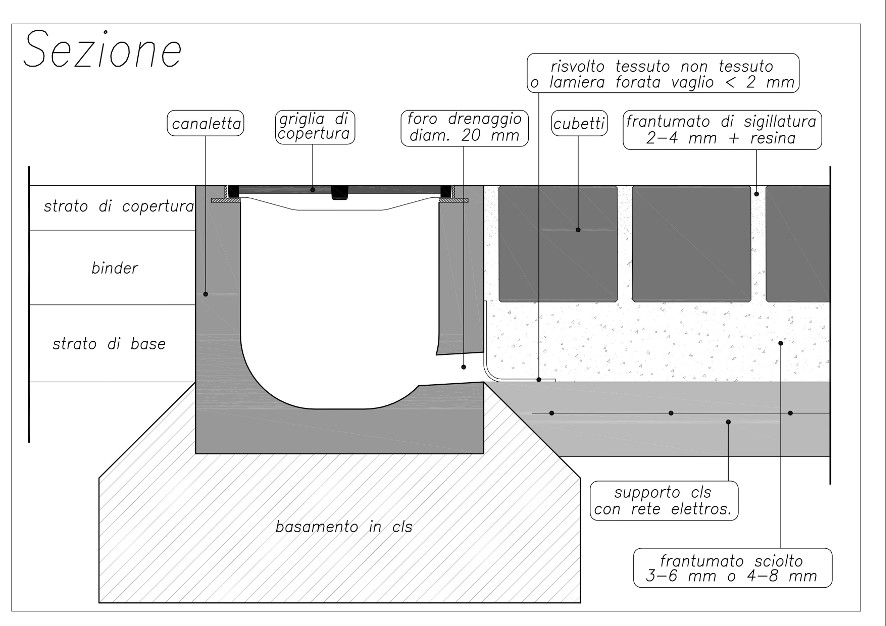
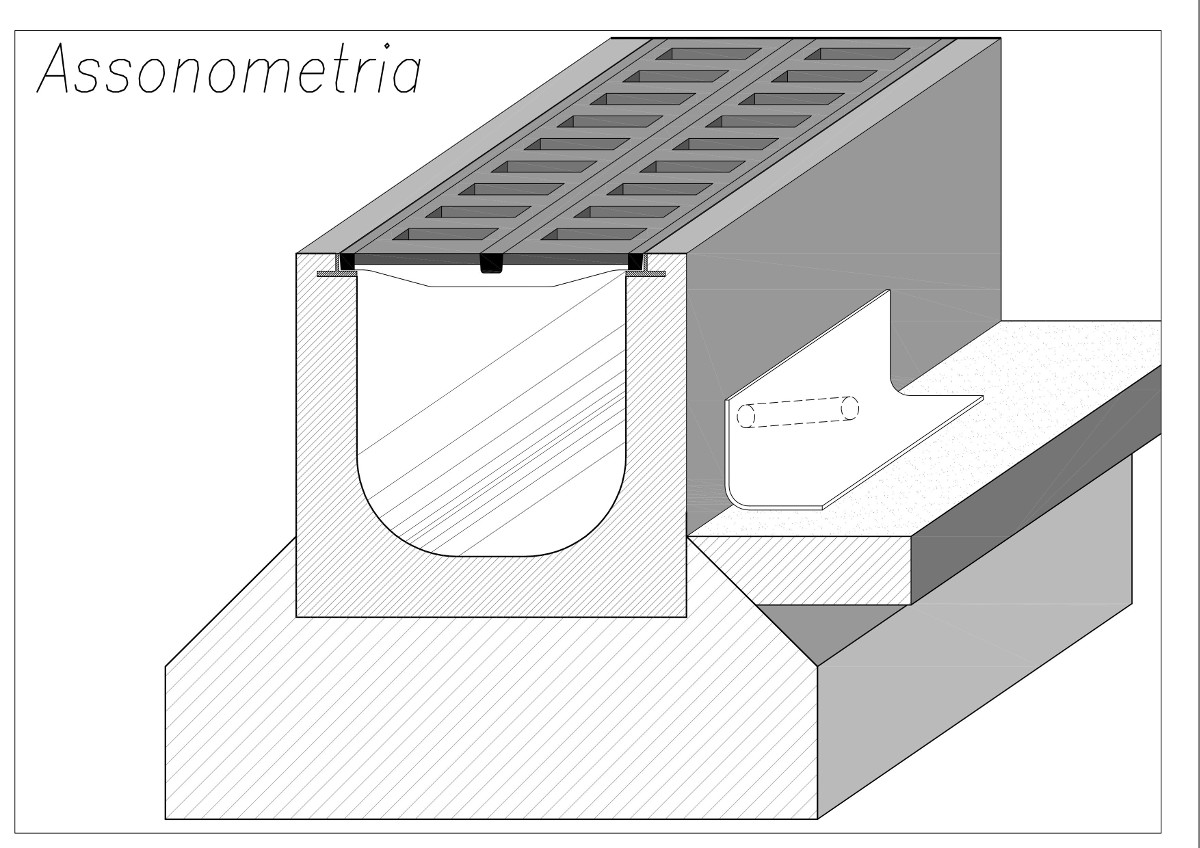
Regarding the preparation of the roadbase, there are no particular indications as to the ideal type. At present, a considerable proportion of pavements finished with this sealing system have given excellent results in the presence of a concrete lean-to shaped to the correct elevations below the finished surface and in compliance with the slopes. In this context, and given the partially draining characteristic of the product, it is useful to set up drainage points at areas of water accumulation or stagnation on the support surface: for example, by making a few holes or slits at rainwater collection sumps or channels arranged in a line, with protection of the same using non-woven fabric or metal sheets with appropriate screening. However, there is nothing to prevent the use of cylindrical macadam support, cemented mixture or even draining concrete.
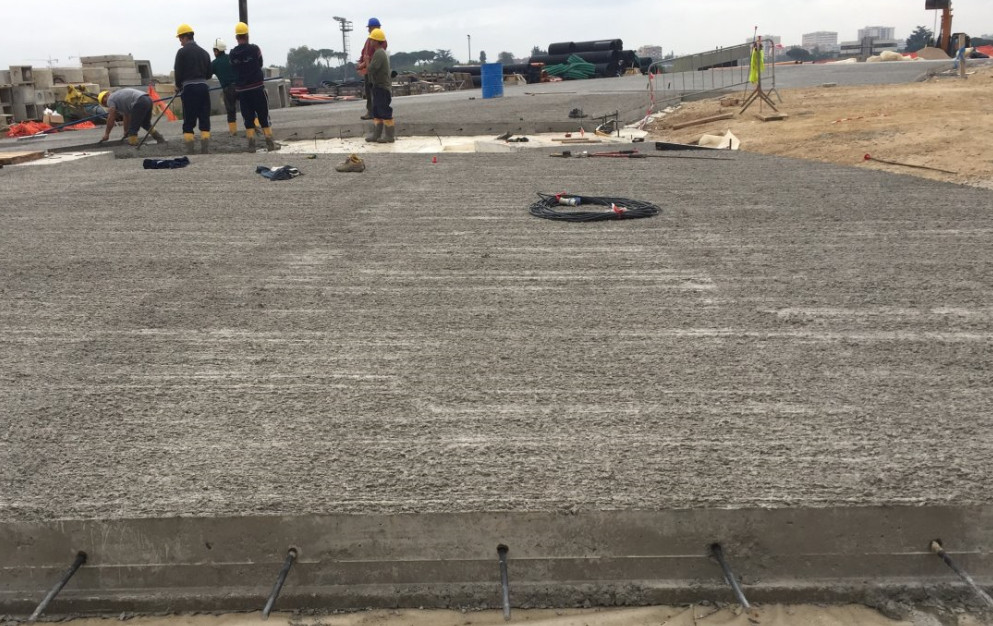
Polyurethane resin as an isocyanate-based chemical fears moisture. The Mapestone Joint technical data sheet specifically specifies that before starting the sealing stages, it is necessary to make sure that the magmatic crushed stone bed is sufficiently dry. So in case vibrocompaction with water supply has been carried out, it is highly recommended to wait for the technical drying time. Just as dry and clean must be the sealing crushed stone. For this reason, the material should only be spread shortly before the actual resin procedures. And for the same reason in the case of cylindered macadam substrate or stabilized soil, where it is easier to encounter pockets of residual and rising moisture after rainfall, great care must be taken in this regard. In this logic, sealing operations are not recommended in the early morning hours, while on the contrary, there is no contraindication in case the operations are managed in the hottest hours, even at very high temperatures and/or presence of wind. Exactly the opposite of what conditions the sealing phases with cementitious mixtures. However, the intrinsic characteristics of polyurethane resin highlight how at certain times of the year the use of this sealing system determines the need to thoroughly evaluate the operational and meteorological conditions and thus the correct scheduling of interventions. It is not possible to describe the solutions to be adopted depending on the different circumstances, but it is nevertheless clear that starting in the late autumn season, work with resin sealing must be carefully planned, also assessing the consequences dictated by the impossibility of proceeding and therefore the need to suspend work.
La vibrocompattazione è operazione strategicamente fondamentale per la durabilità della pavimentazione sigillata in resina poliuretanica. Posto che la posa avviene con sovraspessore, la compattazione deve essere effettuata con attrezzatura adeguata alla tipologia dei manufatti lapidei. Quindi con cubetti 4/6 si deve ricorrere ad un costipatore di potenza minima 15-18 kN, con cubetti 6/8 potenza 25-30 kN, con cubetti 8/10 potenza 30- 40 kN e così via. In ogni caso a compattazione ultimata è sempre consigliabile mantenere un livello del pavimento qualche millimetro al di sopra della quota finita soprattutto in corrispondenza di soglie, fasce perimetrali e punti fissi, al fine di consentire il naturale assestamento che subirà la pavimentazione elastica a seguito del traffico veicolare generalmente intenso e pesante. Per lo stesso motivo il pietrisco di roccia deve avere prestazioni fisico meccaniche simili a quelle offerte dal porfido (prova Los Angeles < 20), onde evitare problemi di polverizzazione e conseguente cedimento del letto di posa nel tempo. Per l’utilizzo del prodotto non sono richieste professionalità specifiche. Il corretto uso è legato ad un minimo periodo di prova per conoscere le caratteristiche e le proprietà del prodotto, la tecnica di messa in opera, nonché le modalità per la gestione dell’attrezzatura necessaria. Il quantitativo di resina da distribuire nelle fughe deve essere tale da evitare quanto possibile il rifluire lungo la superficie della pietra poiché eventuali sbavature sono asportabili solo “a fresco” ricorrendo al Cleaner Mapei. Non è facile invece rimuovere il prodotto una volta indurito. Il consumo medio previsto è di 1kg per mq.
Time to reopen to traffic is contained within 24 to 48 hours under normal weather conditions. No wonder resin curing takes longer under temperature conditions below the optimum conditions specified in the data sheet. Every building material must be allowed to "cure" without forcing. The Mapestone Joint system makes it possible to better manage some delicate construction phases. For example, to meet the needs of logistics and traffic along main roads, it is possible to divide the roadway into two portions, as in classic asphalting cases: with an alternating one-way street, first one way is made; then one way is opened to traffic and the second portion of the roadway is laid and resin coated. With Mapestone Joint, the point of union and contact in the center of the road between the two portions made at different times will not have micro-cracks or resume cracks, which are typical in cases of cement-based pavements. And also for this reason it allows at any time restoration operations with excellent results both aesthetic and functional. The floor is draining (as contemplated by UNI EN 12697 - 40), and simultaneously elastic, resistant to deicing salts, acids and marine spray. It is not subject to the formation of grass or mosses. It withstands work carried out with sweeping machines appropriate to the lithotype. It is sound absorbent. It does not require expansion joints and simultaneously limits heat absorption compared to pavements made with a cementitious system.
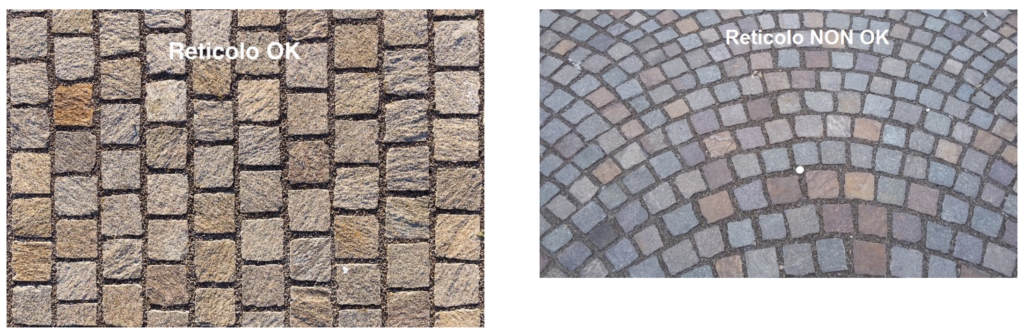
The excellent performance offered by polyurethane resin has led some practitioners to believe that the product is the panacea that solves all ills. Not true! For a polyurethane resin floor to perform at its best, it must first and foremost be executed following all the execution procedures laid down in the Uni standard and in the industry's technical manuals. This means, as we described above, that the substrate must be contoured in accordancewith useful thicknesses. That the stone and crushed stone be of an adequate type to withstand the different stress classes. That the laying is carried out according to manual. That overthickness and subsequent compaction are handled according to the prescribed rigor. That in essence, the floor is perfect already at the stage preceding polyurethane resin sealing. On the contrary, in recent times there have been too many cases in which the laying of the elements is done with an excessive size of the joints, and in any case with an unsuitable joint grid to ensure the normal strength of the floor. While it is therefore preferable that the cubes do not touch each other in order to allow the resin to percolate into the joint, it is equally true that the sealing resin alone cannot be entrusted with the task of ensuring final strength. That is, the latticework of the joints must prevent the possible undermining of individual cubes prior to sealing. The images below illustrate two different cases.
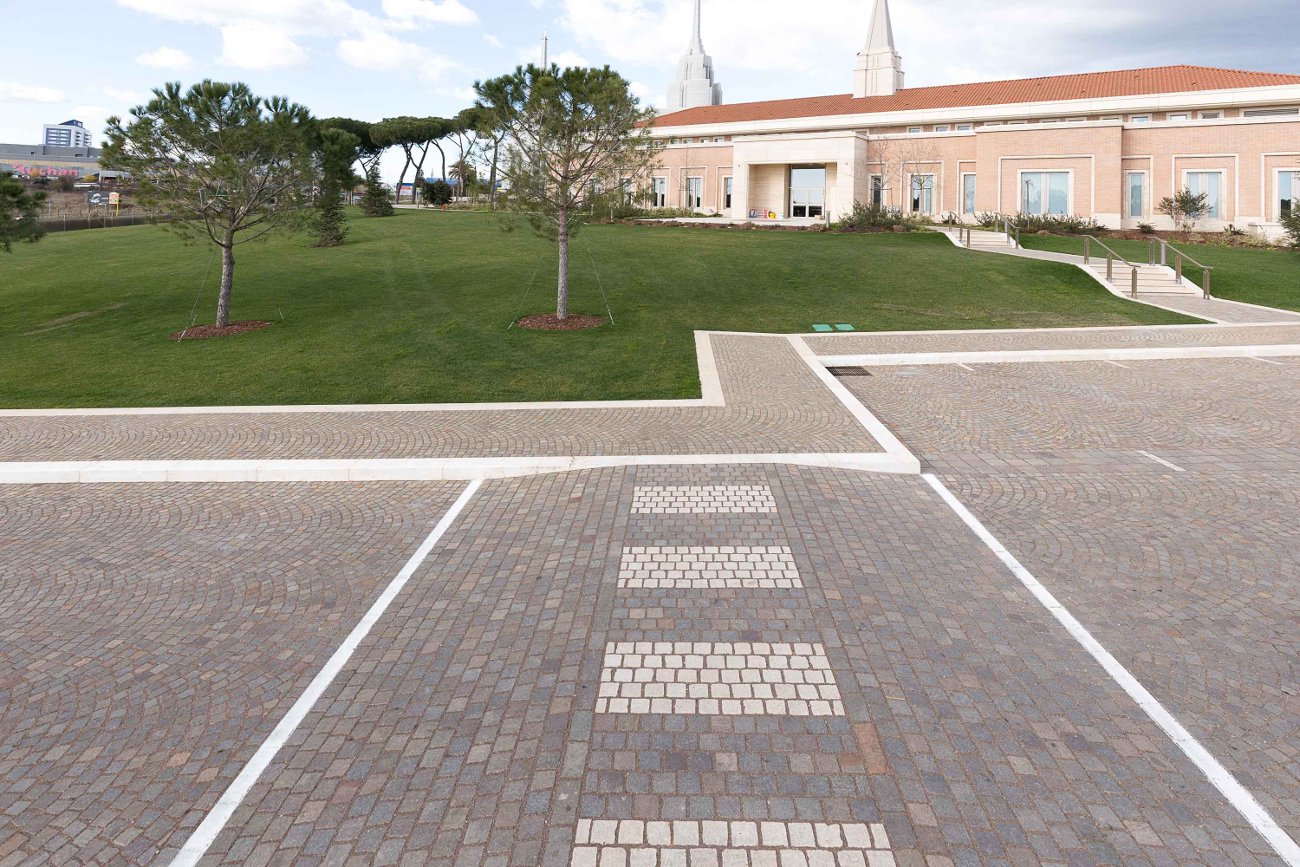
PORPHYRY CUBE FLOORING WITH POLYURETHANE RESIN SEALING - stress class P9
Supply and installation of Trentino porphyry pavement meeting the characteristics of the Trentino Porphyry Controlled Brand type Italporphyry executed in cubes with natural quarry surface, split side faces, laid in contrasting arcs (or parallel rows) on a bedding layer, consisting of crushed magmatic rock, clean and dry in suitable grain size 3/6 mm and at correct thickness of 5/6 cm maximum. Once the laying of the cubes has been completed, the interstices must be filled with the same allurement draining aggregate followed by the normal phase of compaction and mechanical vibration. Then including the further clogging of the joints with crushed stone of the same or smaller grain size 2/4 mm perfectly clean and dry, the subsequent laying of polyurethane resin type Mapestone joint, complying with the requirements and registered according to the Reach Regulation (EC), poured in each joint manually with a system consisting of a cylinder with controlled pressure (maximum 3 bar) and injector for dispensing at low risk of any violent spillage. The polyurethane resin used must be free of solvents and flammable substances, with characteristic odor and suitable for disposal or recycling in accordance with current regulations on special non-hazardous waste, supported by documentation with sworn certifications; mixed with the sealing stone, the polyurethane resin must provide precise indications of conductivity and drainage permeability in accordance with the provisions of UNI EN 12697 - 40. The porphyry material shall be supplied with Declaration of Performance and CE marking, as required by Regulation 305/2011, and UNI EN 1342, with updated performance data. The price includes and compensates the charges for the supply and laying of the bedding, the formation of the slopes necessary for the disposal of rainwater, the simultaneous beating by means of a suitable mechanical vibrator, the possible replacement of broken or deteriorated cubes during the work, the sealing of the gaps with resin and anything else necessary to give the work finished in accordance with the provisions of technical standard UNI 11714-1 for stress class P9.
Cubes size cm .....
Notes:
By resolution of the Provincial Council No. 2051 of Oct. 19, 2018, the requirements of the new Quality Mark for Trentino porphyry and stone were approved and are currently awaiting imminent implementation. The requirements of the new mark expressly recall the contents of the 1995 voluntary mark as amended. Italporphyry companies adhere to the regulation.
Italporphyry provides the expertise and professionalism of its staff in the approach and purchase phase of the product, devoting as much time as the customer deems necessary for the correct use of the materials.
But of course Italporphyry will also always be present in the construction site and after-sales service phase.
At Italporphyry it is possible to purchase Mapestone Joint in the packaging best suited to the characteristics of the construction site: 25-kg canisters; 200-kg drums up to 1000-kg tanks (subject to order).
It is also possible to purchase the Mapestone Joint Cleaner canister provided in 5-liter packages.
Finally, at Italporphyry you will also find all the spare parts for the dispensers, such as valves, pins, dispensing hose, guns, etc., for optimal management of all resin operations.
Via Kufstein, 1 - Staircase A, 2nd floor
38121 TRENTO (TN)
Tel. +39 0461 829835
Fax. +39 0461 829838
Email: info@italporphyry.eu
Web: www.italporphyry.eu