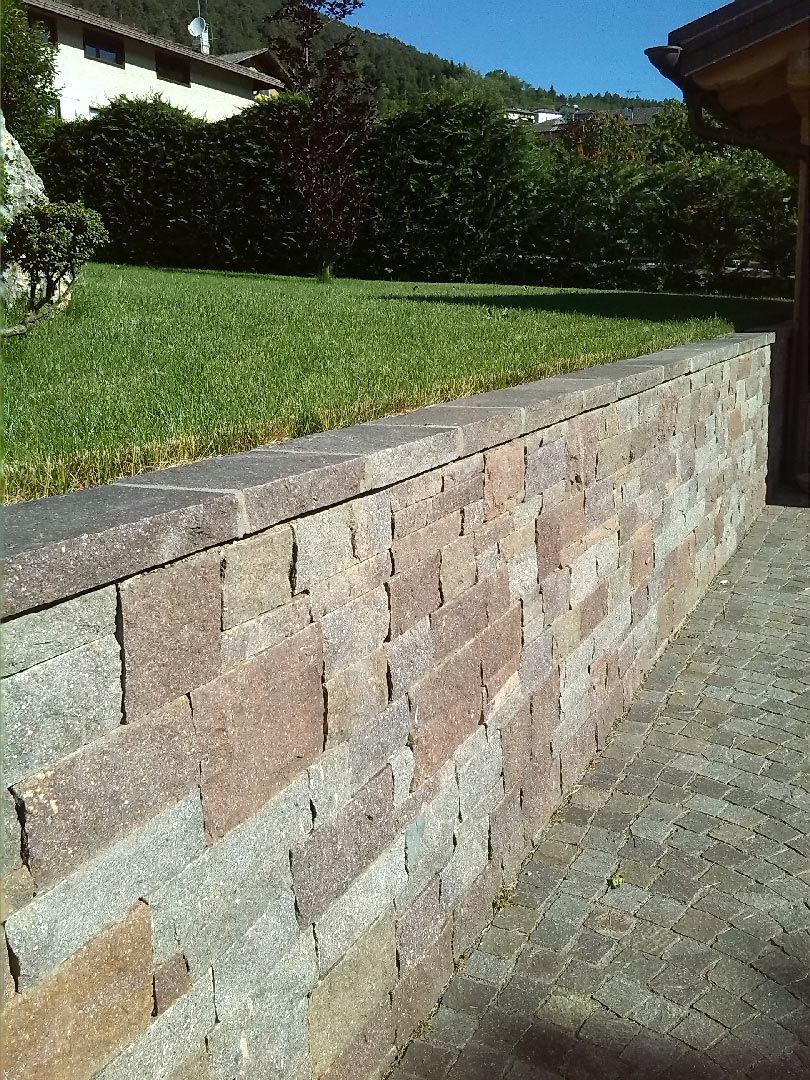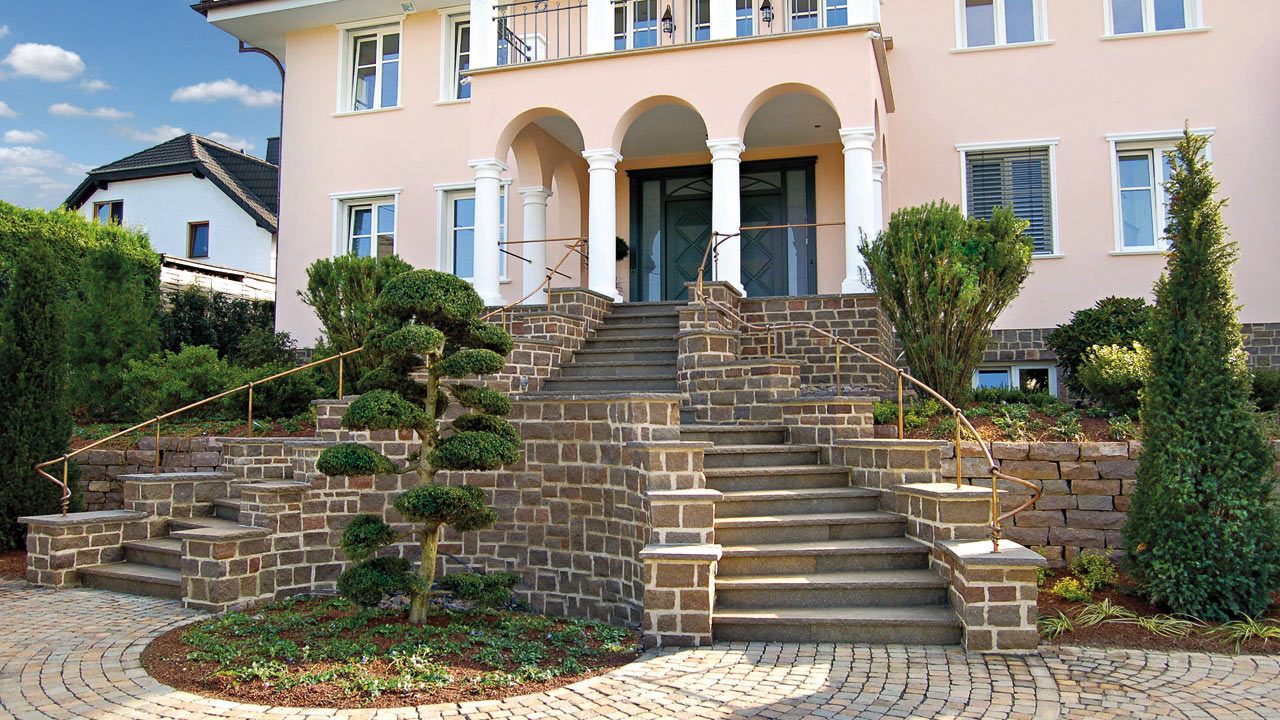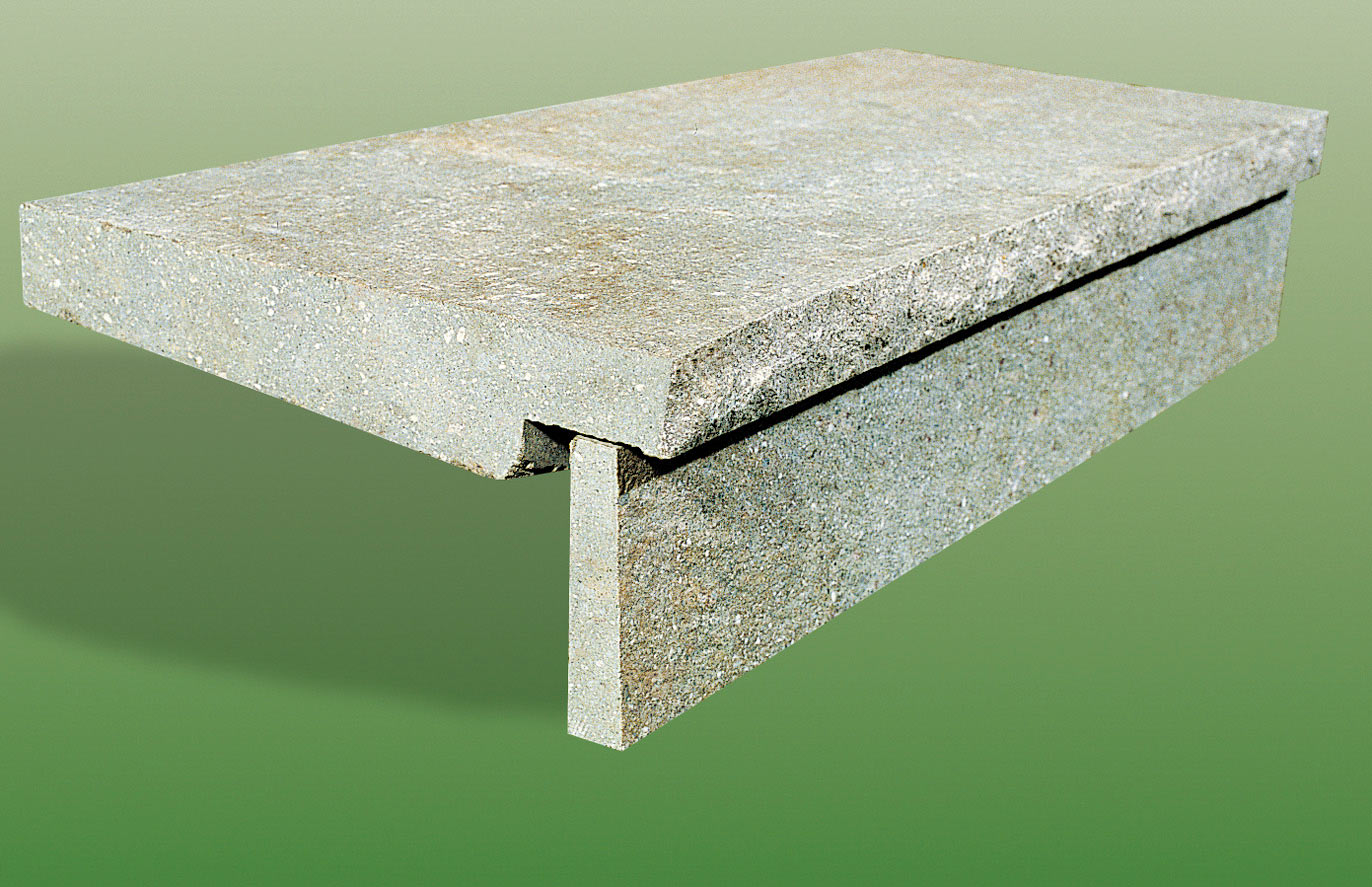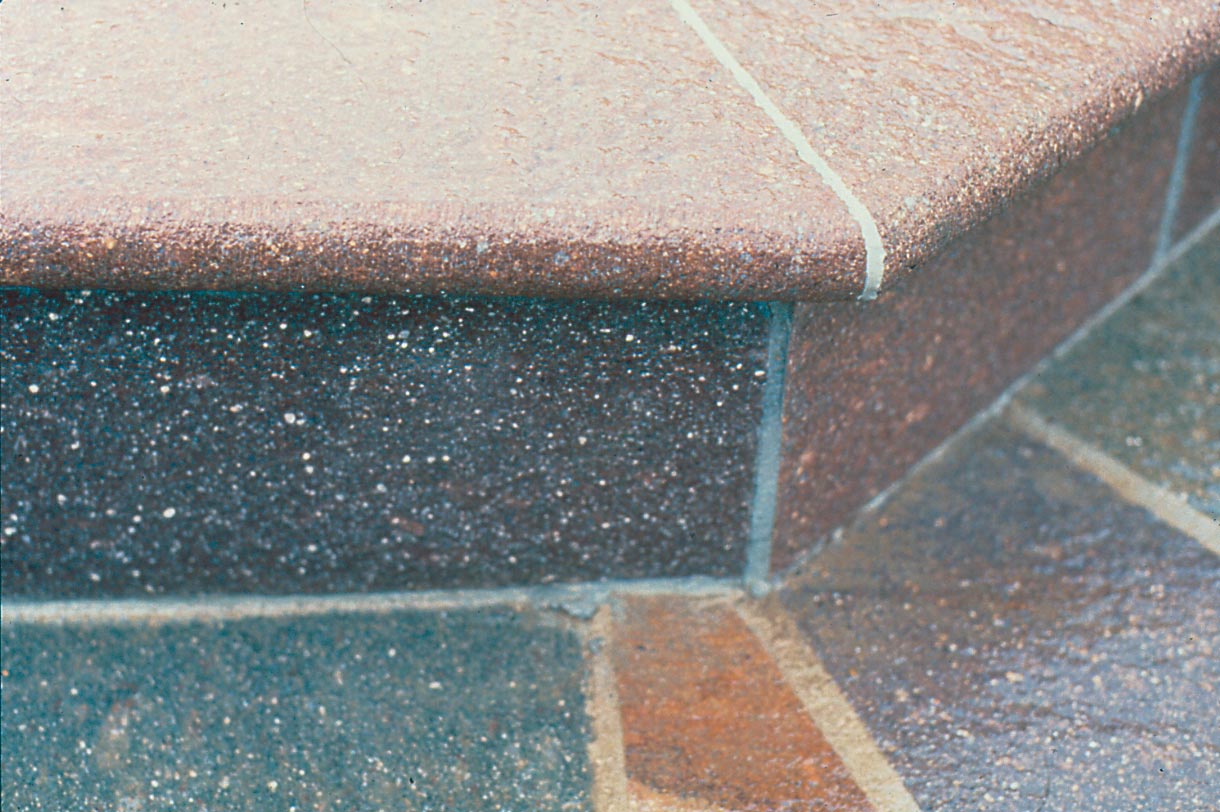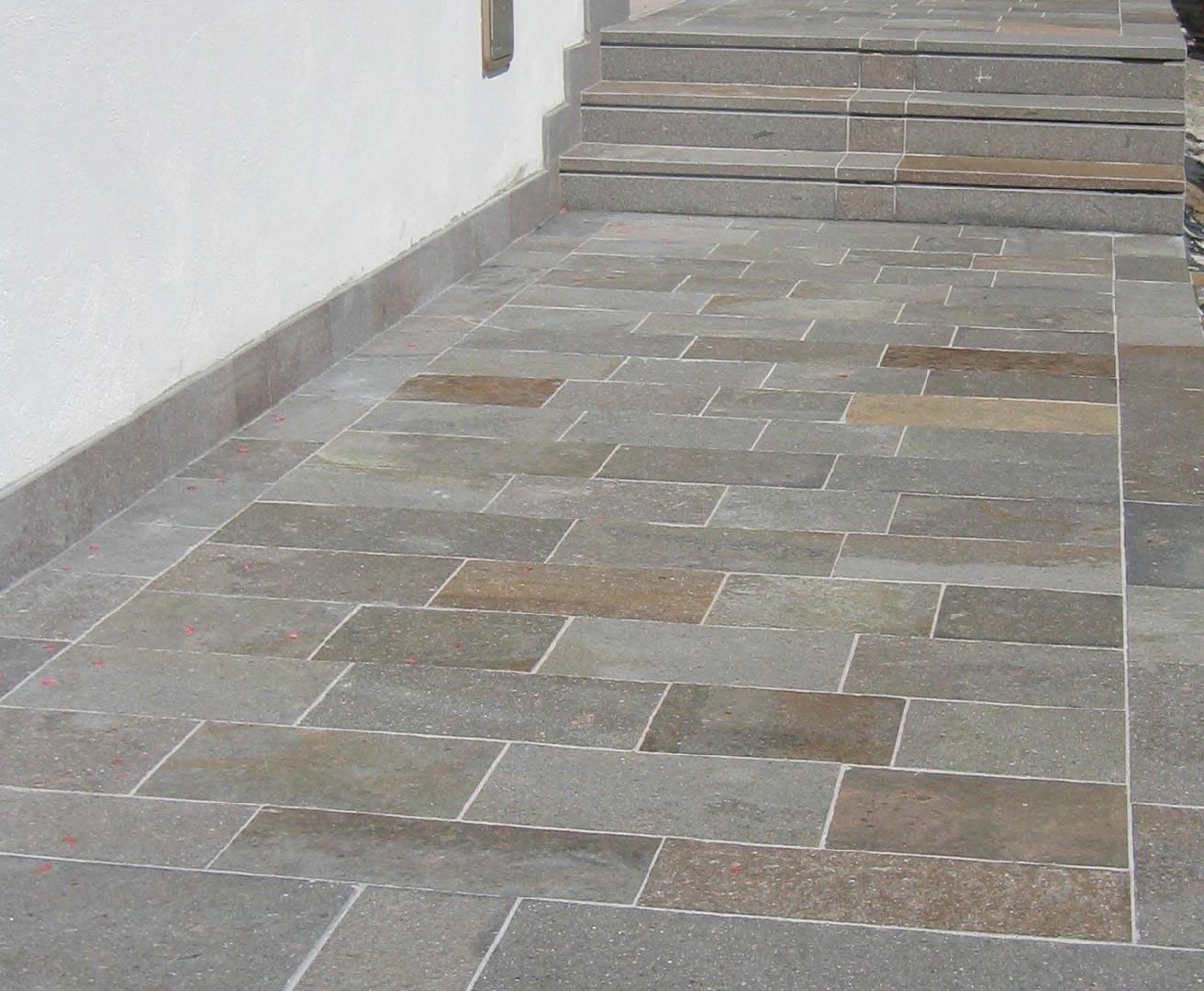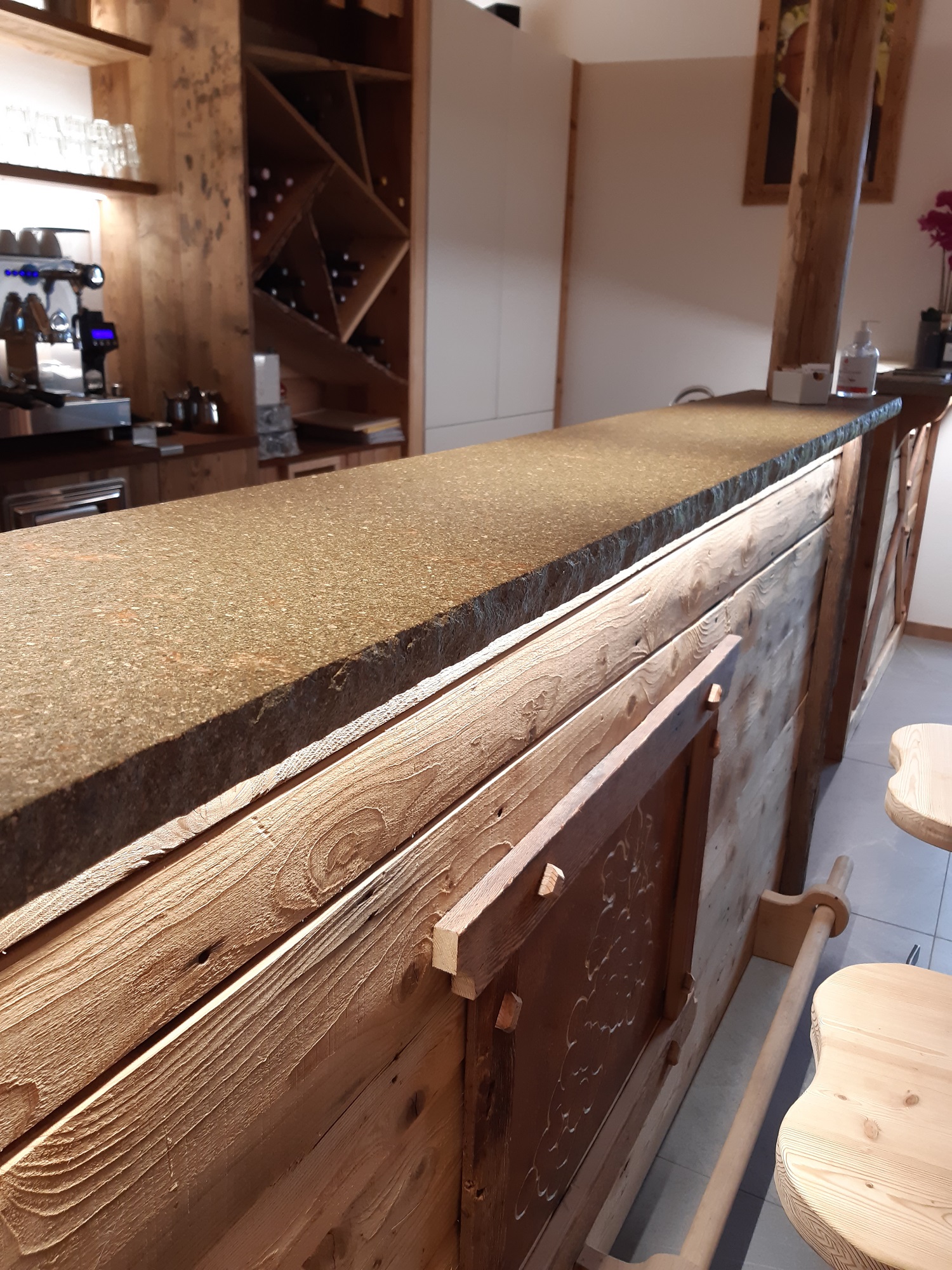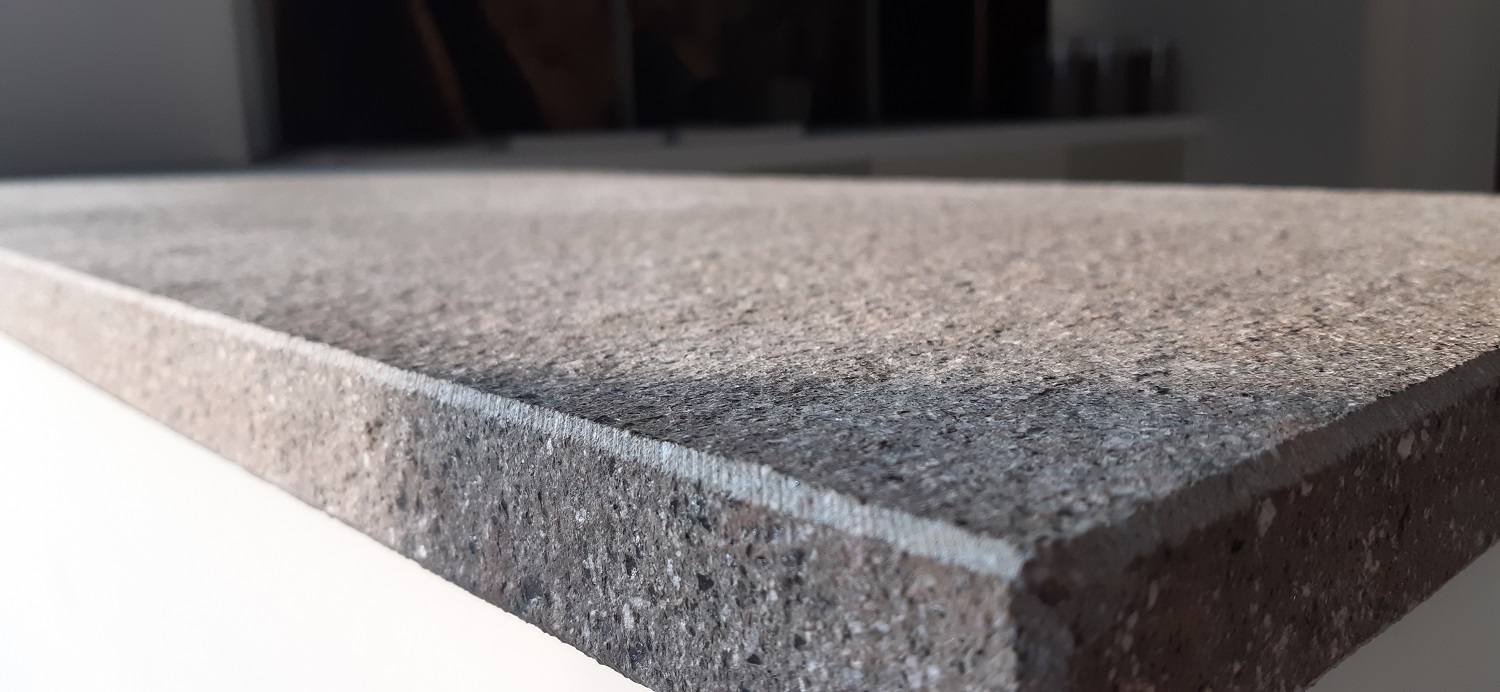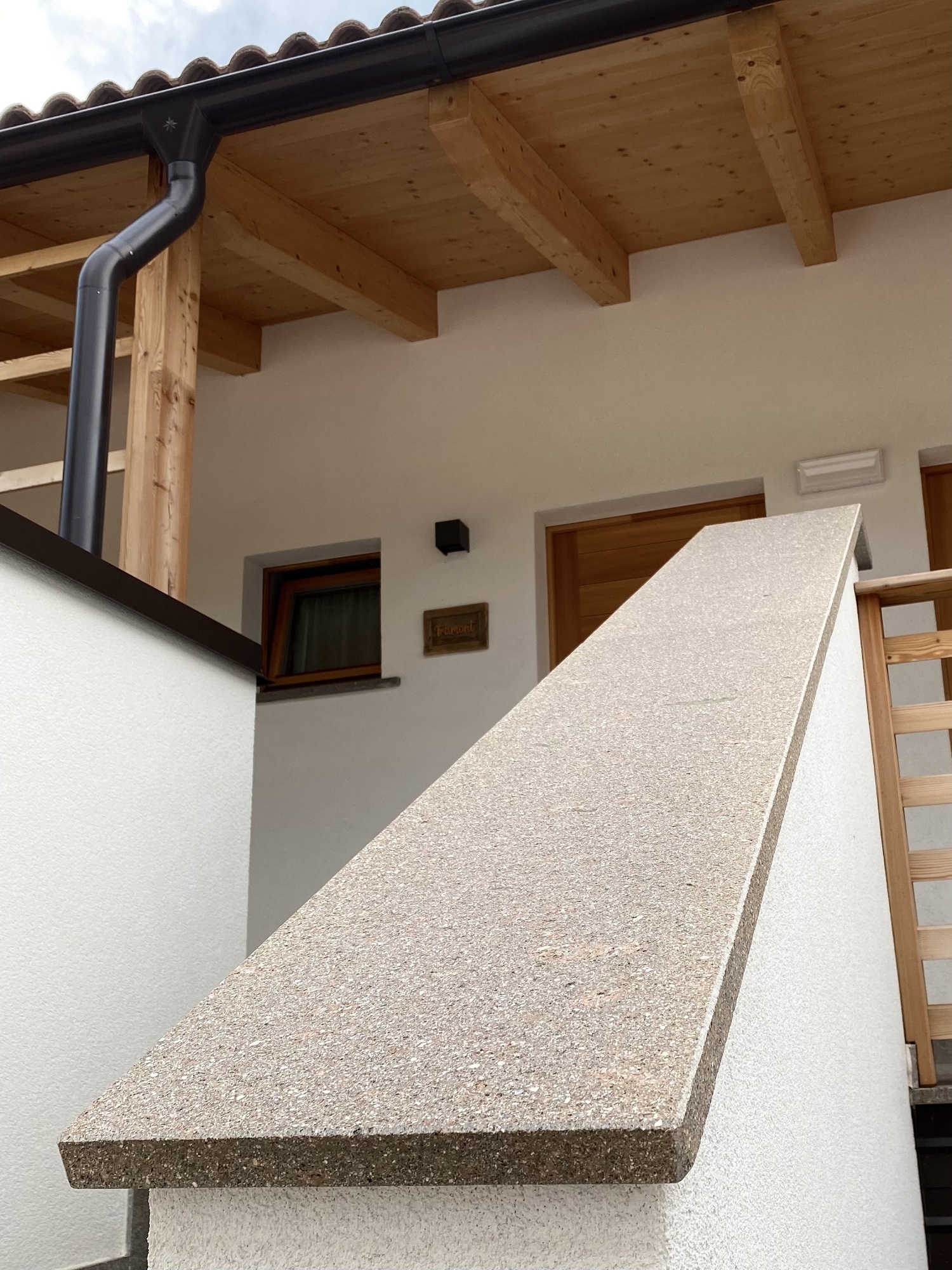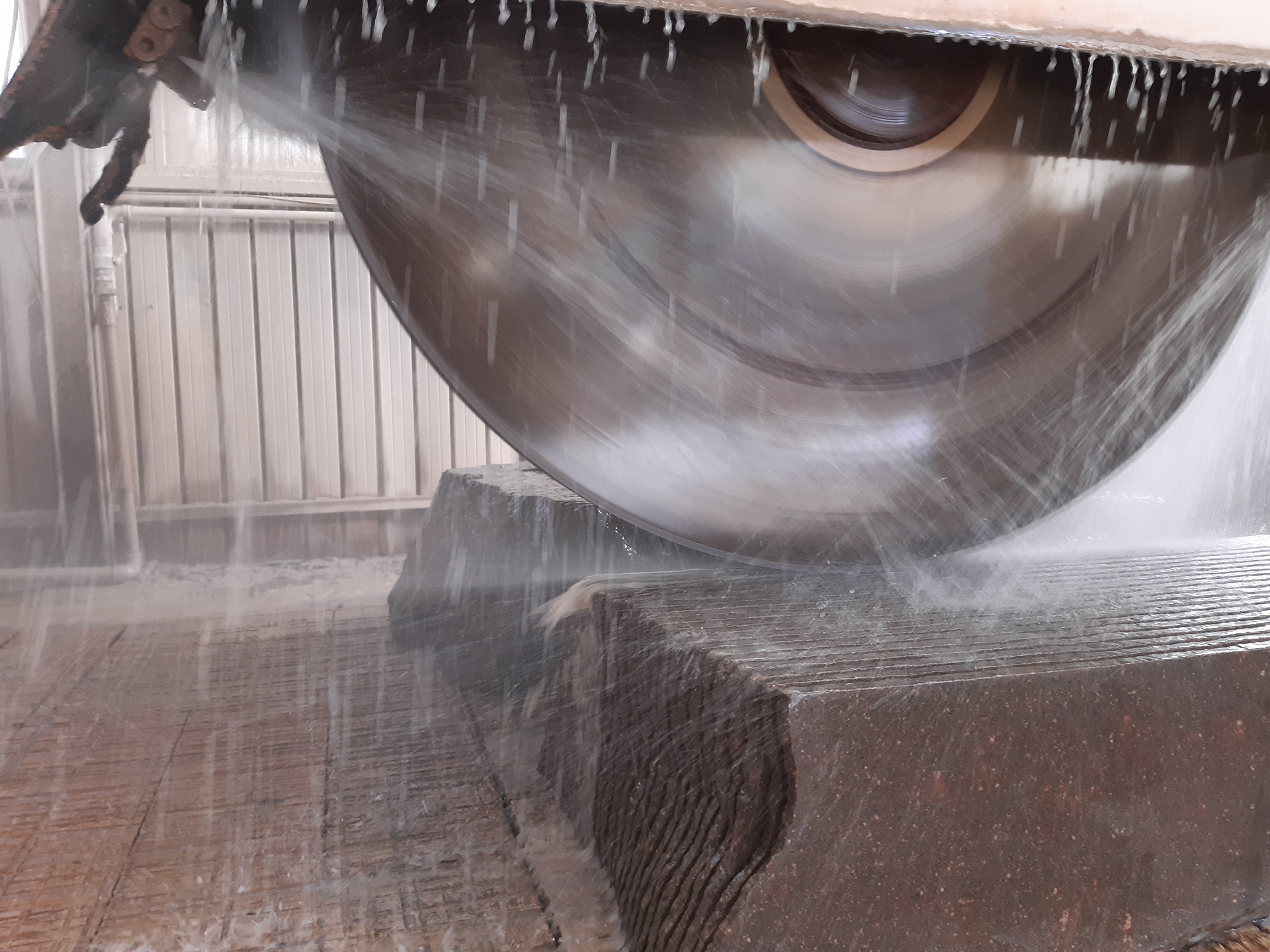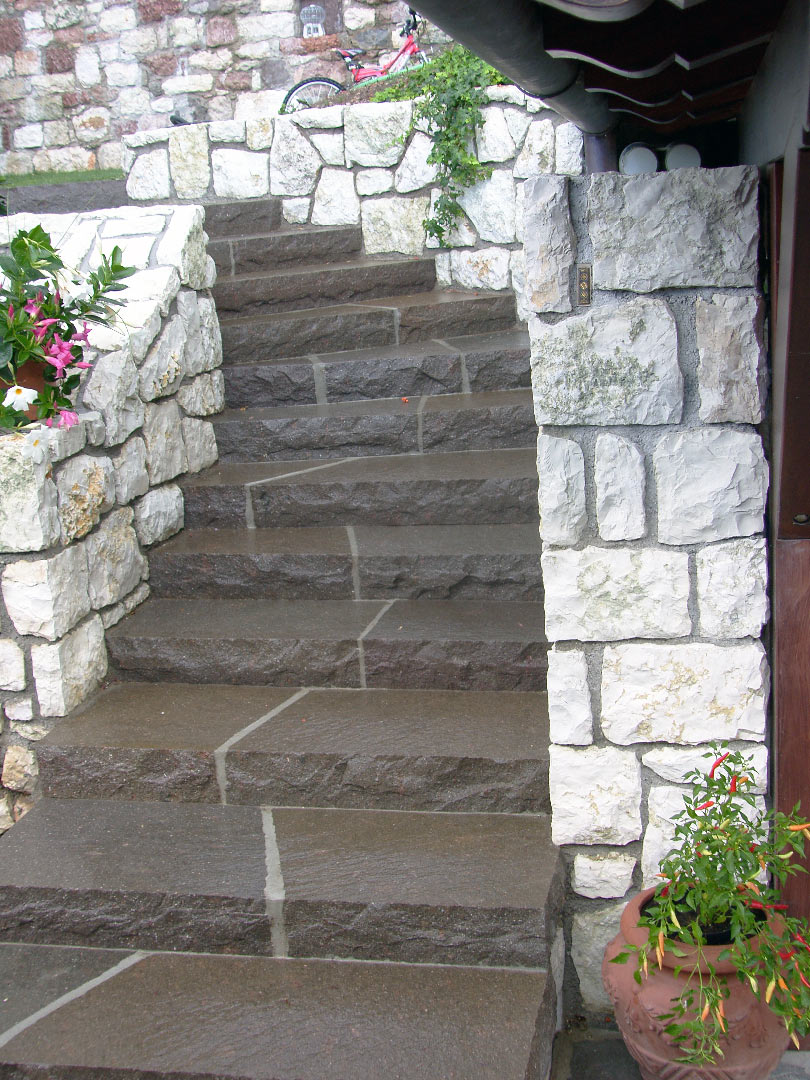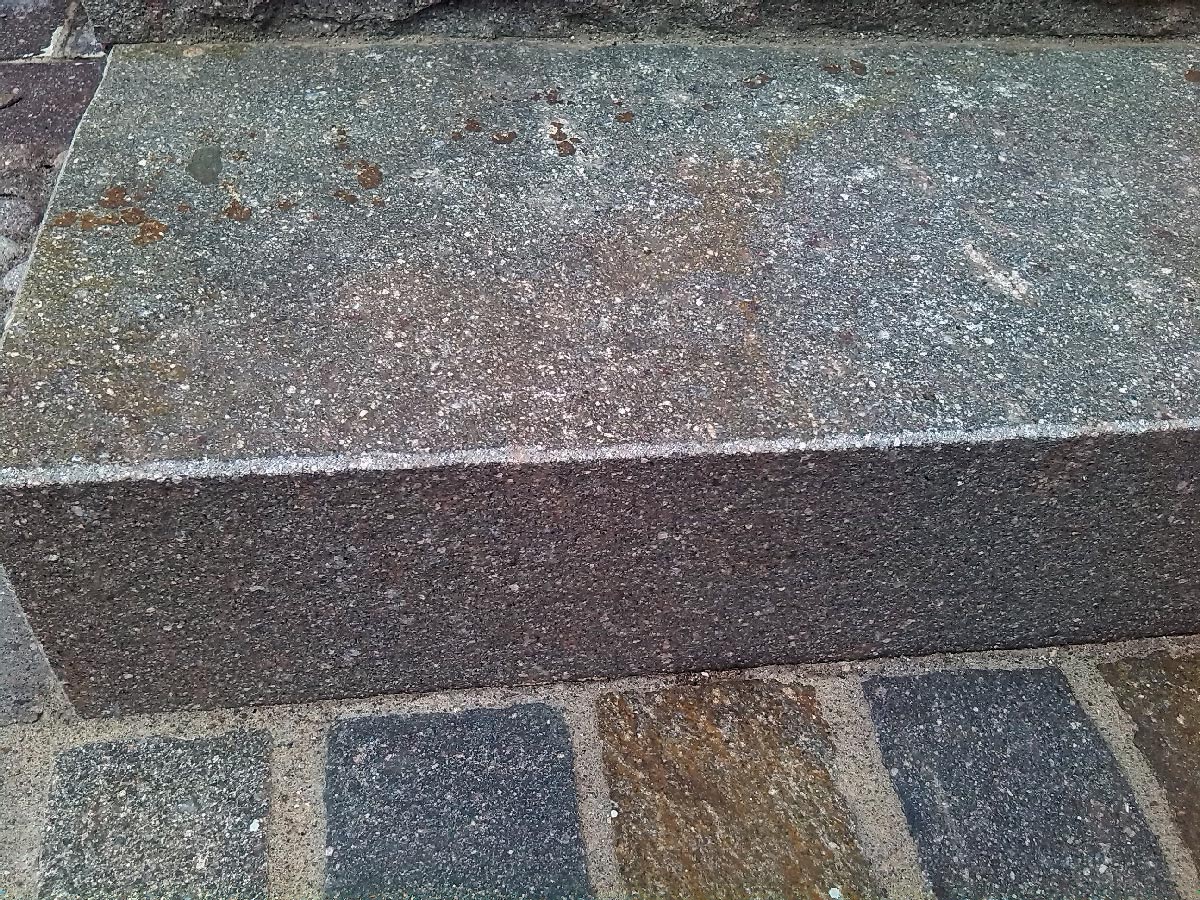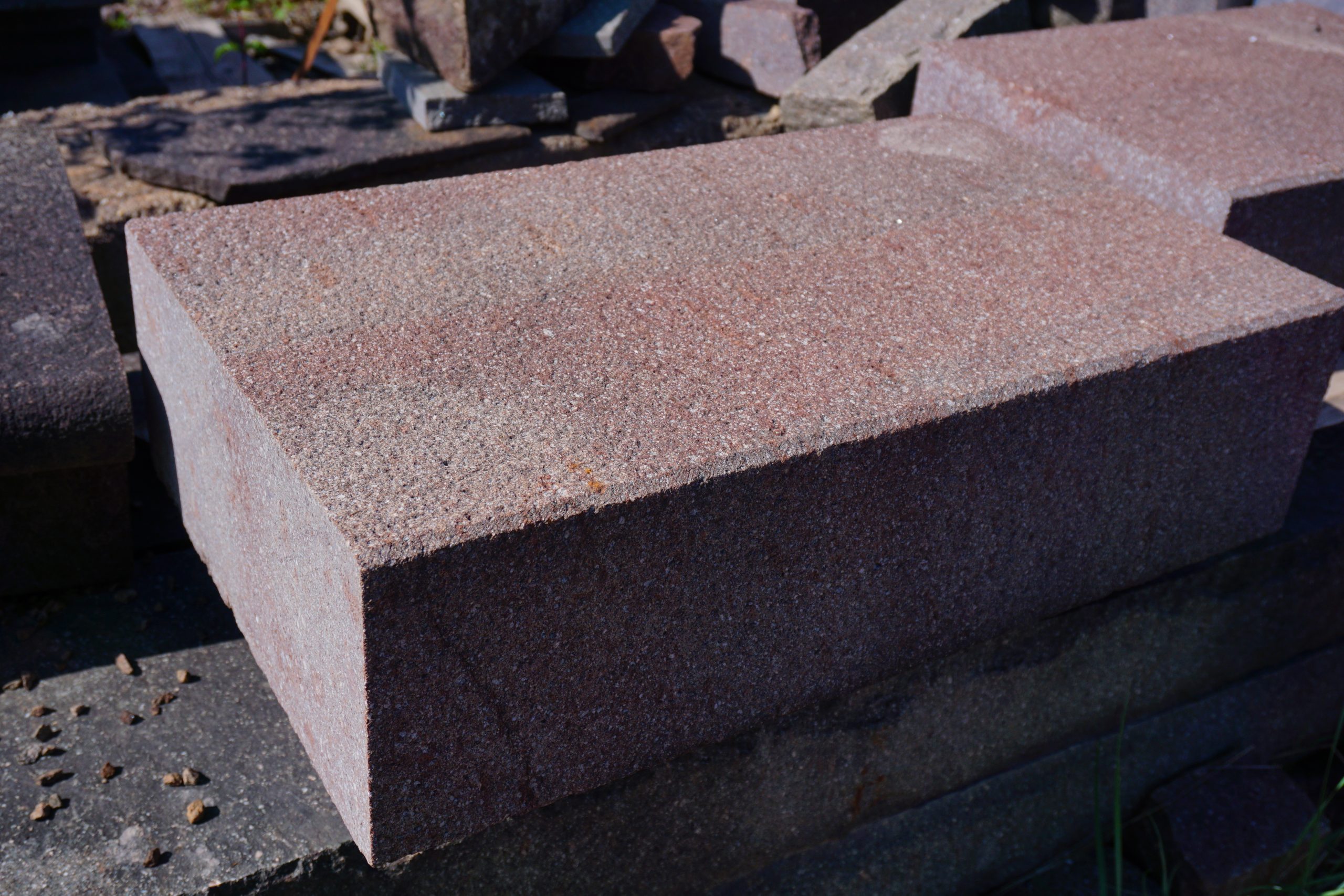
There are three main types of steps:
| Trade name | Trentino porphyry |
| Color | Red, gray, red violet and rust or mixtures |
| Processing | obtained by mechanical splitting from stratified material with natural plane, variable thicknesses with selection of thicknesses tending to be homogeneous, or obtained by sawing stratified material with natural plane into calibrated thicknesses. |
| TYPOLOGY | DIMENSIONS WIDTH (mm) | THICKNESS (mm) | POSSIBLE USE | PROCESSING CHARACTERISTICS AND FINISHES | USEFUL THICKNESSES FOR LAYING (mm) |
|---|---|---|---|---|---|
| Sliced - splitted | 150-200-250-300-330 | 20-40-50 | Outdoor stairs | For covers: double sheared exposed sides with uniform thickness in the wall cover | About 80 |
| Covering building artifacts (e.g., walls) side boundaries (e.g., balconies, landings, etc.) | |||||
| Long edge sawn and calibrated for 50 mm other sides sawn | 100 - 500 | 30 - 40 - 50 | Outdoor stairs | Sides only sawn, gauged, and chamfered sides split sides chiseled sides double exposed Dripstone Working heads seen (in the covering of walls) Polished sides | about 80 |
| Covering building artifacts (e.g., walls) side boundaries (e.g., balconies, landings, etc.) |
| Trade name | Trentino porphyry |
| Color | Red, gray, red violet and rust or mixtures |
| Processing | Obtained from stratified material with natural plane surface, variable thicknesses,or by sawing from block with subsequent surface treatment |
| TYPOLOGY | DIMENSIONS WIDTH (mm) | THICKNESS (mm) | POSSIBLE USE | PROCESSING CHARACTERISTICS AND FINISHES | USEFUL THICKNESSES FOR LAYING (mm) |
|---|---|---|---|---|---|
| Flamed, brushed, shot-blasted honed, polished | 100 - 400 and others on request | 30 - 40 - 50 - 60 | Interior staircase (flamed, brushed, blasted, polished) | sides only sawn and beveled Split sides Chiseled sides Double exposed sides Drip groove Working edge seen (in the covering of walls) Polished sides | from 60 to 100 depending on the type for mortar laying |
| Outdoor stairs (flamed, shotblasted) |
|||||
| Covering building artifacts (e.g., walls) Side delimitations (e.g., balconies, landings, etc.) |
| Trade name | Trentino porphyry |
| Color | Red, gray, red violet and rust or mixtures |
| Processing | Obtained by sawing a block with subsequent surface treatment |
| TYPOLOGY | DIMENSIONS WIDTH (mm) | EXPOSED PROCESSED EDGES | PROCESSING CHARACTERISTICS |
|---|---|---|---|
| Natural quarry surface | Height from 60 to 200 | Sawn Flamed textured surface Split | In the case of exposed sides, lateral calibration and processing is necessary |
| Flamed textured surface | Height from 60 to 200 | To the coarse point Sawn Flamed textured surface | Beveled sharp edges |
| Shot-blasted textured surface | Height from 60 to 200 | Bush-hammered textured surface | Presence of perimeter band with sawn quarry plane |
| Height from 60 to 200 | Flamed textured surface | Beveled sharp edges |
|
| Milled | Beveled sharp edges |
||
| Sand-blasted textured surface | Beveled edges |
Via Kufstein, 1 - Staircase A, 2nd floor
38121 TRENTO (TN)
Tel. +39 0461 829835
Fax. +39 0461 829838
Email: info@italporphyry.eu
Web: www.italporphyry.eu