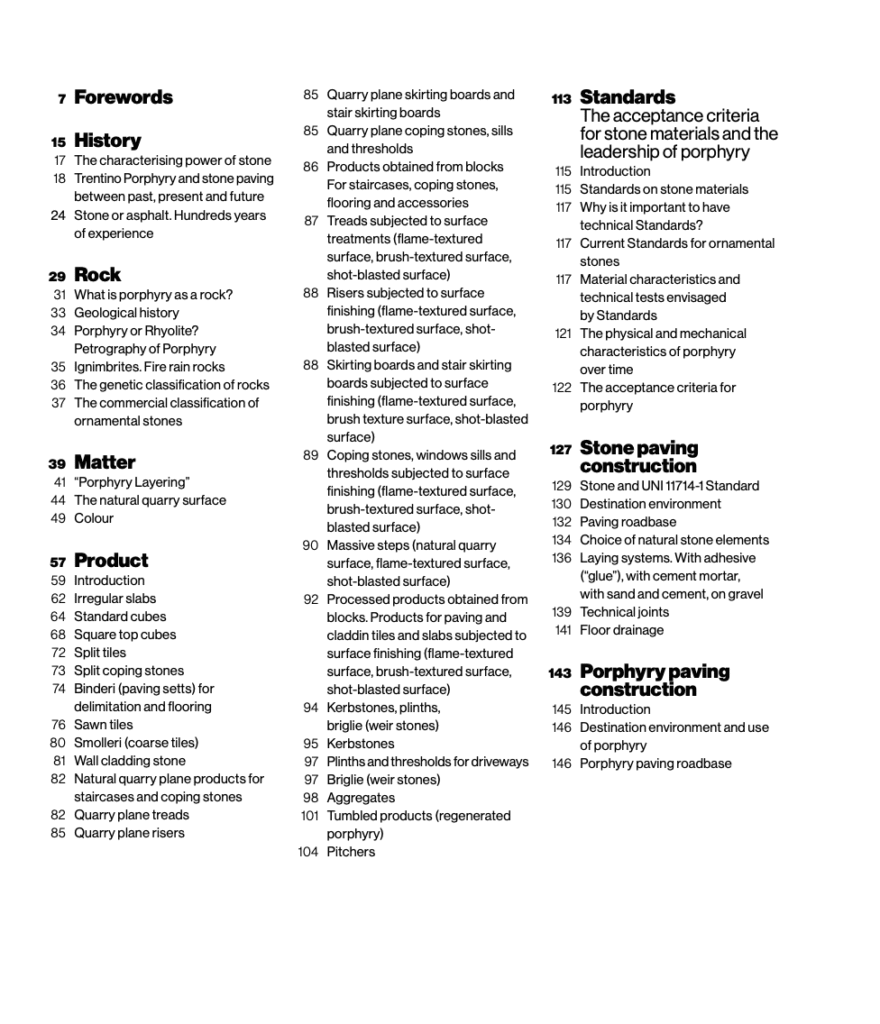
History teaches us that stone paving, especially in the public sphere, constitutes the most widespread and appreciated criterion for the covering of streets, squares, parks and sidewalks, as well as one of the main elements for the furnishing and decorating of the urban scene. In particular, the stone road, with the related materials and equipment used, has been and is probably the element historically most representative of the transformations brought about by economic and social changes and thus of the changing needs for the movement of men and means in their different types of functionality and aesthetic taste. The city's stone streets are the heart of the historic centers and with their interweaving of transits and trajectories draw the urban fabric. From this point of view, since the 1930s, although in conjunction with the introduction of the innovative asphalt due to its high-performance petrographic and physical-mechanical characteristics, Trentino Porphyry has been appreciated above all for its functionality and resistance, finding an ideal place in paving and public works for exteriors especially at high road stress.
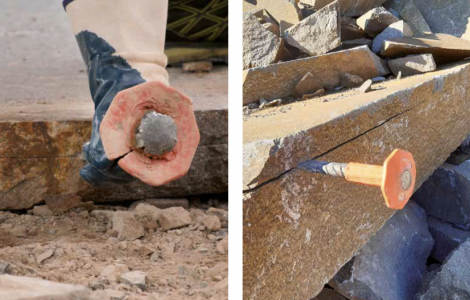
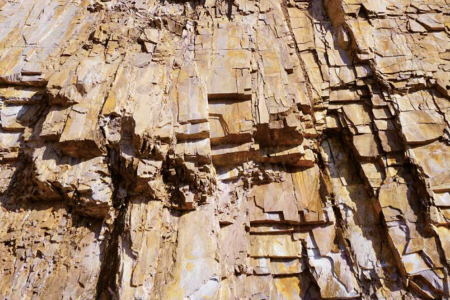
The prerogative of Trentino porphyry is its slab-like appearance that is immediately recognizable even at the scale of the rock mass due to the presence of sub-vertical cracks with planar trends with centimeter to decimeter to metric spacing. This very special structural feature due to the cooling contraction of the volcanic deposit is called "lastrification" or, with a term porphyry borrows from sedimentary rocks, "stratification." It should be remembered, however, that by stratification we do not refer to strata understood as successive levels of deposition, but to a phenomenon that is typical of cooling lavas and can take on lastrolar or, more often columnar forms, as for example seen in the very famous columnar basalts with a hexagonal cross-section at the Giant's Causeway on the coast of Ireland. The raw material exhibits a highly articulated layering in varying thicknesses, which on the one hand conditions the extraction system, with quarry fronts completely different from those of so-called "block quarries," such as marble and granite, for example, and on the other allows the divisibility of the same into polygonal slabs that are extremely irregular in plan dimensions, but have natural planar planes that tend to be parallel and planar, with a degree of roughness that cannot be worn away.
Color is increasingly one of the particularly sought-after aesthetic requirements for the enhancement and completion of the design and architectural solution. In porphyry, "layering/stratification" is the main cause of the material's great structural mutability at the color level. For this reason, it is unthinkable to bring the coloring of artifacts back within the typical gradations of a Pantone or otherwise a rigid classification. On the contrary in its range Trentino porphyry allows different levels of reading, with a variety hardly found in other stones and shades ranging from gray, to gray/brown, from gray-violet to purple, from mixed red to bright rust. The presence of dissimilar bedding at the various elevations influenced by seepage and cracking of complex magnitude, together with contamination that nevertheless arose from the natural environment, with concretions and oxides penetrated in diversified form and quantity, made it so that any uniformity of color of the porphyry was difficult. The circumstance is detectable not only on a general level considering the mining area as a whole, but even within individual mining areas where diversities and inhomogeneities can characterize one step from the other, even to the point of being able to find shades of multiple colors on the surface of a single slab.
Most of the production in Trentino Porphyry is based on exploiting the potential of the natural quarry plane, with variable thickness, which allows the finished product to be obtained by intervening only with the processing of the sides (or ribs), mainly with mechanical shearing operations, but also with sawing in the laboratory by means of diamond discs. The versatility of quarry-floor products is complemented by manufactured and processed products obtained in the laboratory from rough slabs or small blocks in sizes smaller than those that normally identify the actual blocks, but such, however, as to allow most of the traditional fine workings typical of the stone industry (e.g., flaming, brushing, shot-blasting, polishing, etc.) with destination also in indoor environments. In this chapter, descriptions of the different commodity types are proposed for which there are additional subcategories, each of which finds specific uses according to different stress classes.
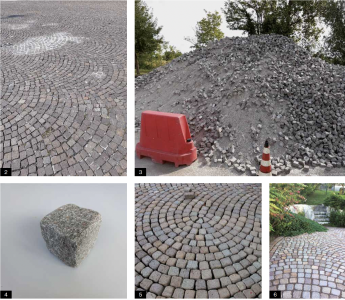
Standardcubes
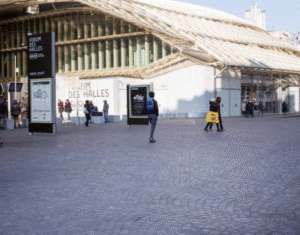
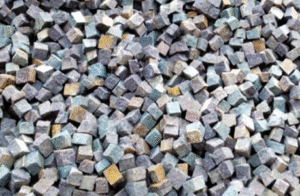
Cubes undoubtedly constitute the princely product in the history of Trentino Porphyry. And in the collective imagination, the cube identifies the splitting product par excellence. Indeed, stone cubes and in particular those made from porphyry have been present in every corner of the globe for more than a century. From Corso Vittorio Emanuele in Milan, to the Piazza del Viminale in Rome, from Les Halles in Paris to the National History Museum in London, from Le Castille Square in Malta to Piazza Bra in Verona, the porphyry cube declined in different formats and geometric arrangements has shown all its personality characterizing the urban landscape and making it recognizable even to the "layman."
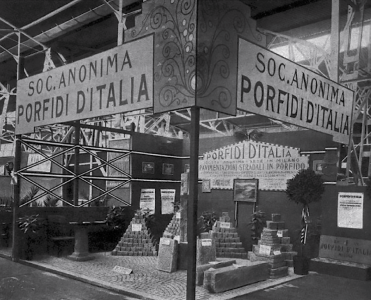
The cubes are obtained through the splitting action of the manually operated shearing machine, which insists by compression on the four sides perpendicular to the two natural planes of the rough slabs obtained from the sorting stage.
Two major product categories are distinguished: standard cubes with the dimensions in plan and in variable thickness, and square-headed cubes with regular and fixed dimensions in plan, with variability only in thickness. For both categories, the cornerstone that conditions all production operations is the thickness of the raw material, to which the operator adjusts to realize the dimensions in plan in order to fall back to the cubic shape. Therefore, and by way of example, with a rough slab about 7 cm thick, the cube maker will be able to obtain a cube of the 6/8 cm type, where each of the three dimensions comes between 6 cm and 8 cm.
From this point of view, it must be reiterated once again that the natural "layering/stratification" of the material does not allow for rough slabs of fixed thickness. Thickness deviations are traced back to specific assortments that identify dimensional and usage categories, each of which is in turn characterized by as many tolerance ranges, also because all elements are made manually.
While all ornamental and/or building stones are rocks, not all rocks can be ornamental and/or building stones. In fact, for a rock to also be an ornamental and/or building stone, it is not enough that it has unquestioned, albeit subjective, aesthetic characteristics of chromatic pleasantness and design. It is essential that it be available in exploitable, attainable deposits with volumes comparable with the demands, that it be endowed as much with a good predisposition for working as with good durability, that is, with a good aptitude for maintaining, once in use, its aesthetic and morphological characteristics unchanged over time. Availability and durability, moreover, are decisive factors in both the economic value of one ornamental stone over another and the economic value that the ornamental stone brings to the artistic or architectural artifact.
The laboratory determination of a stone's technical properties, while derived from conventional procedures that are a necessary compromise to reproduce in the laboratory what happens in situ, is usually predictive of its behavior in situ; therefore, it is desirable that these measurements be carried out according to operational protocols that make them accurate and precise, that is, repeatable. Only in this way can the results obtained from technical tests on different lithotypes, in different locations, and at different laboratories be compared with each other, and only in this way can a comparative evaluation of the lithotypes be made at the design stage according to the stresses to which it will be subjected once in place.
Current standards for ornamental stones differ between European (EN) and U.S. (ASTM) standards. An ISO technical standards committee was also formed in 2020 and is working on establishing a single set of standards applicable worldwide, which will be available in the coming decades.
European standards include 3 types of standards: terminology standards, which contain the vocabulary of the industry; test methods, which describe the operating methods for performing laboratory tests to determine the technical characteristics of materials and products; and product standards, with mandatory or voluntary application, which define the minimum performance requirements for natural stone products such as slabs, cubes and kerbs for vehicular paving, modular paving tiles, cladding slabs and stairs.
Natural stone, by virtue of its great versatility of use, especially in the case of paving, constitutes one of the building materials most subject to the operating conditions related to the target environment from residential interiors, to commercial interiors, to outdoor road and public settings subjected intensively to the effects of climate and especially stresses.
UNI 11714-1 standard "Stone coverings of horizontal, vertical surfaces and ceilings - Part 1 Instructions for design, installation and maintenance," published in 2018, was developed by the experts of WG 20 Stone floors and coverings of UNI/CT 033 Commission - Products, processes and systems for the building body - consisting of manufacturers of natural stone and products for its installation and maintenance, trade associations, testing laboratories, universities, and design services.
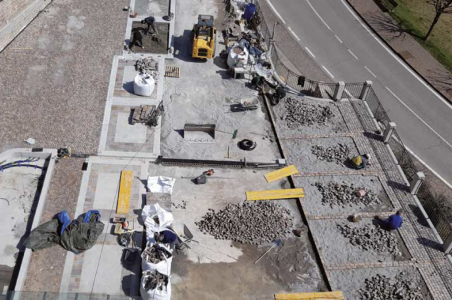
In Sections 4.2 and 4.2.1 to which reference is made, the types of cubes are identified with a distinction between standard and selected square top production, and in Section 7.3 the possible corresponding intended use and the corresponding sizing of the stratigraphic package are explained. The picture of the options for the use of cubes is now completed with indications of the different bedding and sealing systems appropriate specifically for the different sizes of elements and consequently for the different intended uses, based on what is explained at a general level in Section 7.4.
The UNI 11714-1:2018 standard in section 5.6 introduces for the first time in a technical standard on stone, the principle of sustainability and environmental impact referable to the entire life cycle of manufactured products, and then suggests the general parameters to be taken into account in the design and implementation of stone claddings. In fact, the standard indicates sustainability among the indispensable requirements of natural stone claddings. Based on the assumption that stone is an exhaustible non-renewable resource, the designer is required to pay due attention to the choice of products and materials to ensure adequate performance in the main parameters of sustainability and environmental quality. Indicators that help the pursuit of these goals include: recovery and recycling of natural minerals; use of regional resources; reduction of CO2 emissions to the air; reduction of water consumption; and reduced use of substances harmful to health and the environment.
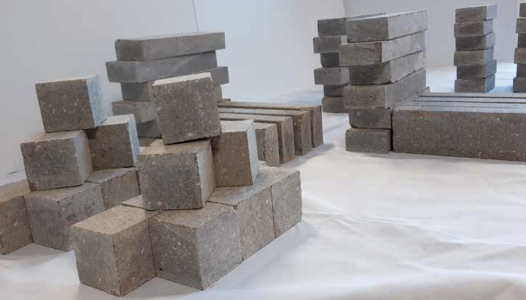
In addition to durability, Trentino Porphyry enjoys the privilege of being able to use the residue to make by-products for use in retaining cliffs and embankments or retaining walls. No less important is the range of aggregates (see Section 4.10) obtained from the transformation of waste and scrap material into crushed stone in a wide variety of grain sizes intended for construction, road and rail use, but of course also for paving as bedding material (crushed stone mm 3-6 or 4-8) and sealing material (washed and dried crushed stone mm 2-4). In Section 4.11, actual products obtained from processing waste as well as from tumbling processes are presented: flat pebble and "Teres." However, what further distinguishes Trentino Porphyry from many other stones is related to the materials that through a process of sorting, washing and tumbling, allows for the recovery of materials from worn pavements. These are mainly cubes in the different sizes (cm 4/6; 6/8; 8/10; 10/12) and therefore can be placed back on the market, fully sorted and regenerated for a second and even a third useful life.
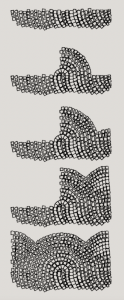
Special aspects of contrasting arc laying: intersections
When the pavement needs to be connected at intersections and/or changes in direction, or even when changes in slope require the reversal of the laying direction, the arcs connect and connect in the manner indicated by the figure below